
Unsafe breathing unit causes diver death
Calls for Wolach 919 breathing unit to be banned
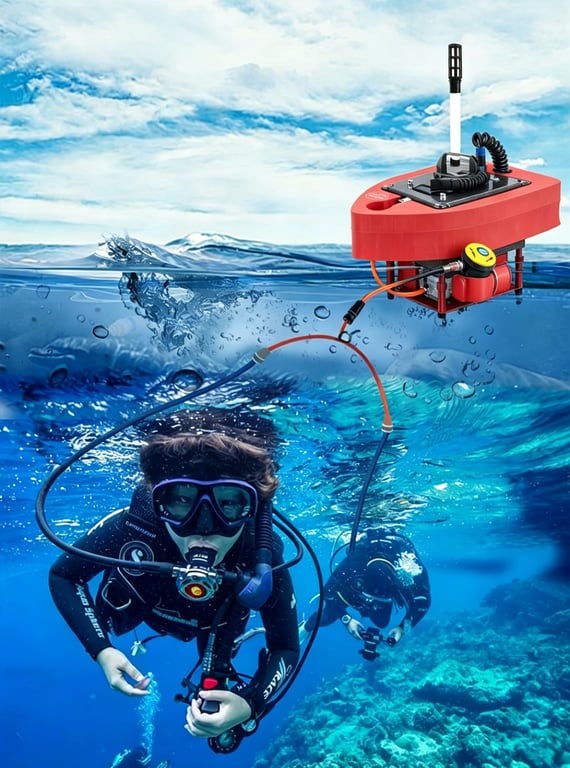

The recent tragic loss of a diver who lost his life after using a surface-supplied breathing system has once again brought up the issue of the importance of training, and of using regulated, tested equipment when going underwater - even if you aren't going deep.
A coroner is calling for a ban on the importation of a breathing tube unit after freediver Shengwei Cao died after buying the Wolach 919 breathing unit, testing it in the bathtub the previous day.
On September 9th, 2026, Coroner Amelia Steel ruled Cao's death as an accidental drowning, with decompression complications a contributing factor.
The tankless breathing tube and pump is a surface-supplied breathing system, also known as a 'hookah system', is similar to the breathing tubes highlighted in our story published in June on the dangers of breathing tubes bought online, many of which are untested and unsuitable for use. This followed a previous safety concern highlighted by Dive Pacific in January 2026 on the dangers of full face snorkel masks - also equipment that can be bought cheaply, both online and in New Zealand, that poses serious safety risks.
When buying this equipment, some novice divers believe that as they aren't technically 'scuba diving', there's no need for training. The reality couldn't be more different.
"With basic training, divers learn to understand the need to monitor depth and time, control their ascent and understand repetitive diving," says NZUA Board Member, Diving Safety, and PADI Course Director Andy Stewart. "They also learn how to reduce the risk of decompression illness and other pressure-related injuries. These devices might look like a simple alternative to scuba, but the same physics and risks still apply."
Cao's death is a tragic loss. While there are important safety lessons to learn from this accident, we offer our respects and condolences to his family and friends at this difficult time.
The fatal dive
Shengwei Cao, 58, drowned on March 5th, 2023, after using the device for a dive near Mana Island in Porirua, Wellington, in an attempt to dive deeper. Cao was not trained in scuba diving, and had been freediving for around six years, usually diving in shallow waters close to shore.
On this occasion, Cao met with a friend, Chen Koo, at the Mana Boat Club, and the pair met up with five other friends who were scuba diving. The group headed to Mana Island, where Cao attached the Wolach to a buoy, diving several times over the following 10-15 minutes. Returning to the boat between dives, Cao said he didn't feel the breathing apparatus was working properly, and he was feeling seasick.
Koo told police that at this point, Cao needed help getting out of the water, but after about 10 minutes, he was feeling better so decided to get back in the water. Not long after, his friends requested Koo take them in his boat to a different location. Unable to get Cao's attention, but noting his breathing bubbles on the surface, Koo left him alone, but on returning to the site 20 minutes later, was unable to approach due to the rocky shore.
Koo alerted a passing boat, telling the pair on board he had a missing diver. William Rongoa and his son Richmond McGill went to Cao's location, and found his body, still attached to the buoy, in around five metres of water.
"The mouthpiece attached to the breathing tube was to the side of Mr Cao's head, rather than in his mouth," reported Steel. A snorkel was supposed to be attached to the air inlet to prevent waves splashing into the compressor air inlet, but the air inlet was damaged. No snorkel was recovered.
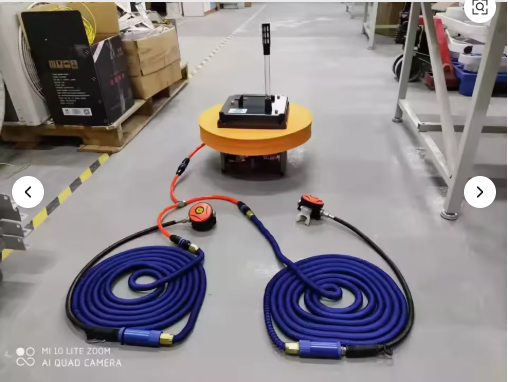
A specialist from the Police National Dive Squad tested Cao's gear in a diving pool. Among several findings, they noted that the Wolach design left the diver with an inconsistent air supply, particularly at depths of 4.5 to 5 metres. The specialist considered it to be 'a dangerous system' that left Cao in an unsafe position without immediately available air.
The specialist explained that using the Wolach system means the diver is breathing compressed air - making anyone using it subject to the same rules and physics as scuba diving.
"Diving blindly"
While testing the breathing equipment, the dive specialist found it harder to draw air from the system the deeper he went due to increased pressure. The Wolach hose was firm when pressurised, but lost structure when pressure was reduced.
He also noted the diver had no means of gauging his depth, thus 'diving blindly' and at risk of decompression illness. The system also has features which could cause panic or stress, leading to carbon dioxide buildup. The specialist also suggested Cao was 'bounce diving' - repeatedly diving to depths shallower than 21 metres, with less than 15 minutes' surface interval between dives.
The importance of training
"The moment anyone breathes compressed gas underwater, they are diving," explains Andy. "It doesn't matter whether that gas comes from a cylinder on their back, or a compressor on the surface. In my view, anyone using this type of equipment should have at least an entry-level qualification.
"We also need to consider the quality of the gas being breathed. Just because a compressor produces air doesn't mean that air is safe to breathe. New Zealand has standards for breathing air quality.Air Purity Limited, which is wholly owned by the New Zealand Underwater Association - Dive Pacific's owner - provides breathing-air testing for the diving industry and thee wider community using compressed gases for breathing.
"Making sure the gas is safe to breathe is just as important as knowing how to use the equipment."
Dive Pacific and NZUA will continue to work closely with the New Zealand Police Dive Squad and MBIE as appropriate.