
Spearfishing science & safety
Rob Harrison explains what to do in a dive emergency
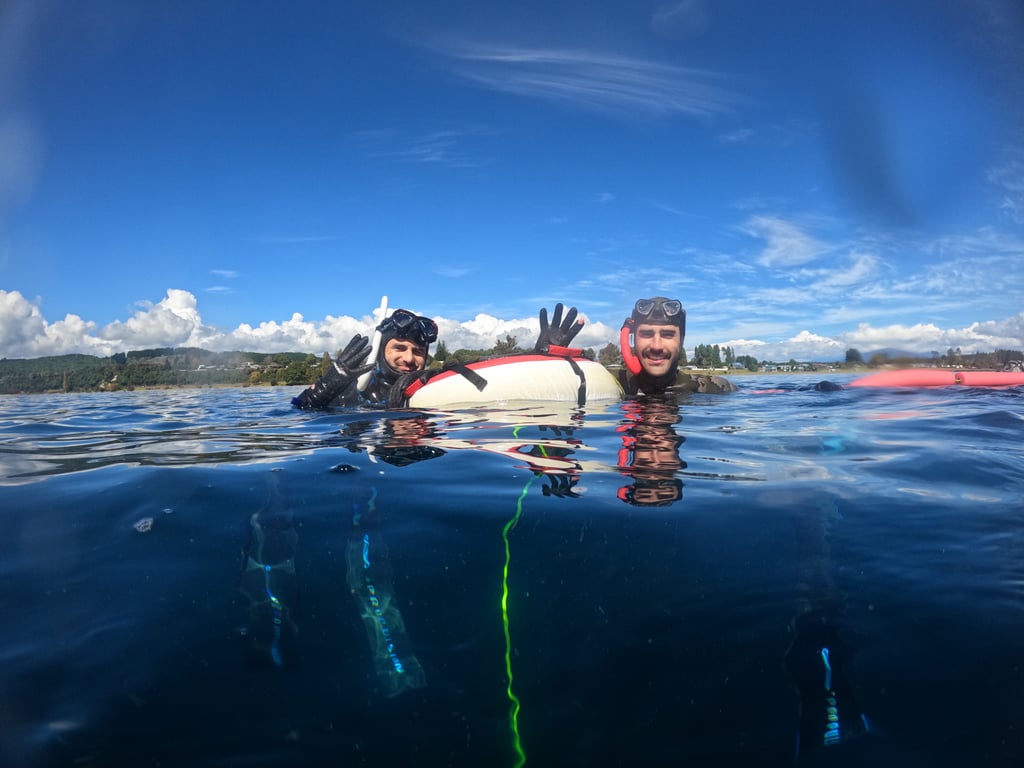

I was in the changing rooms after a pool training session last week when someone mentioned they often dive alone. They knew their breath-hold limit, they said, so they stayed within that timeline. They felt safe. But here's the thing: there's no such thing as a predictable breath-hold.
You might've had a stressful day, a cold coming on, or you're just not feeling a hundred percent. Life happens. And when you're underwater, those variables don't announce themselves, they just shift the goalposts. That's when diving alone stops being safe, and becomes genuinely risky.
But there's another group who feel equally safe diving alone, and they're often more experienced. They've trained themselves to push through CO2 sensation, that burning feeling in your chest that tells you it's time to breathe. They've learned to ignore it, switch it off. And they think that means they've mastered breath-hold. The reality is they've just removed their own warning system.
Top competitive freedivers do this too, but they have safety crew, they're tethered to a line, there's a whole infrastructure around them. For someone diving alone in the ocean? That's a different story entirely. You've taken away your body's alarm without replacing it with anything else.
The science bit
Here's what's actually happening in your body. On descent, water pressure increases. By Boyle's Law, imagine a balloon at the surface versus ten metres down. It's half the size.
Your lungs work the same way. The oxygen becomes more concentrated, and the partial pressure increases. You feel better down there, more alert, more capable, because that compressed oxygen is making you feel fine. But here's the trap: you're still burning oxygen at depth. On the ascent, that pressure drops. Your lung volume expands, and the partial pressure of oxygen in your blood drops rapidly. That oxygen becomes less concentrated, thinner.
Suddenly you've got far less fuel in the system than your body realises.
This is where shallow water blackout happens. Your oxygen can plummet in seconds, and here's the cruel part: your body won't warn you. You don't feel low on oxygen the way you feel CO2 buildup. One moment you're ascending feeling fine, the next moment you're unconscious. There's no alarm. There's no countdown. Just silence.
Now, a lot of training focuses on pushing through CO2, on building mental toughness. But you could argue that's actually backwards. What you should really be working on is technique: streamlining, efficiency, relaxation, getting your freefall dialled in so you're burning less oxygen and moving more effectively. Remove the tension from your muscles, stay conscious about staying calm and composed. That's where real improvement comes from, not from learning to ignore your body's signals.
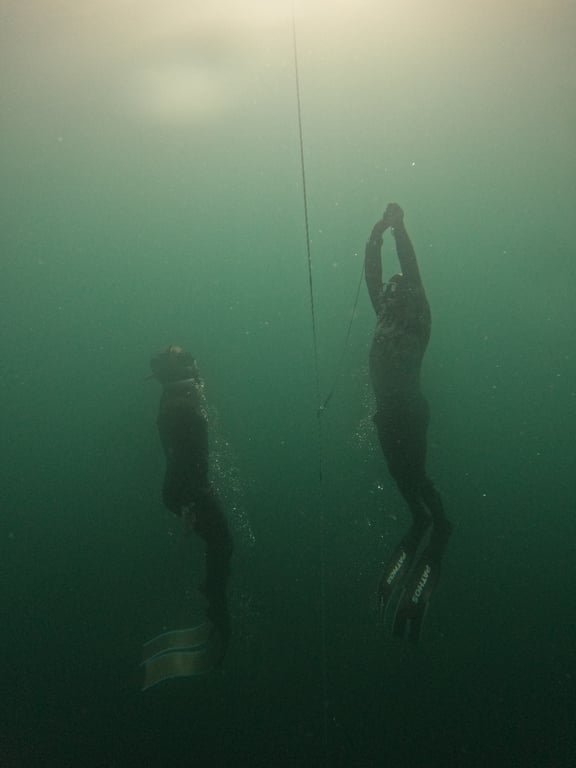
This is where your buddy comes in.
Now, I'm realistic. Here in New Zealand we often go snapper snooping, drifting sections of shallow coast where divers naturally spread out and want their own undisturbed areas. That's different. But when you're working deeper water, a weed line, or pushing time underwater, that demands proper buddy discipline.
If your buddy is trained and capable, they should descend to meet you at around a third of your maximum depth, but only if it's safe for them to do so. We never want a buddy putting themselves at risk to reach a dive that's beyond their own ability. They're there to catch you if something goes wrong on that critical ascent.
What to do in an emergency
Once you're back on the surface, they watch you for at least thirty seconds, checking that you're doing proper recovery breaths, that you're responsive, that you're actually okay. They're also watching for the signs: sudden disorientation, loss of coordination, a blank stare. Most importantly, if they see your bubbles being released as you ascend, that's the signal you've likely lost consciousness and need immediate help. If that happens, your buddy brings you to the surface, and the protocol is SAFE.
That stands for
Surface;
Airway clear and above the water; and
Facial Equipment off.
Remove the mask, remove the snorkel, keep the airway clear.
Then it's BTT:
Blow gently underneath the eye;
Tap the side of the cheek gently; and
Talk to them softly to bring them around. Breathe, breathe. That gentle stimulation and voice can bring someone back.
One more thing: learn to remove your snorkel during the dive itself, not just in an emergency. If you black out with the snorkel in your mouth, water comes straight in. Taking it out as routine practice keeps you safer, and it's better for the fish too, you're not scaring them with bubbles.
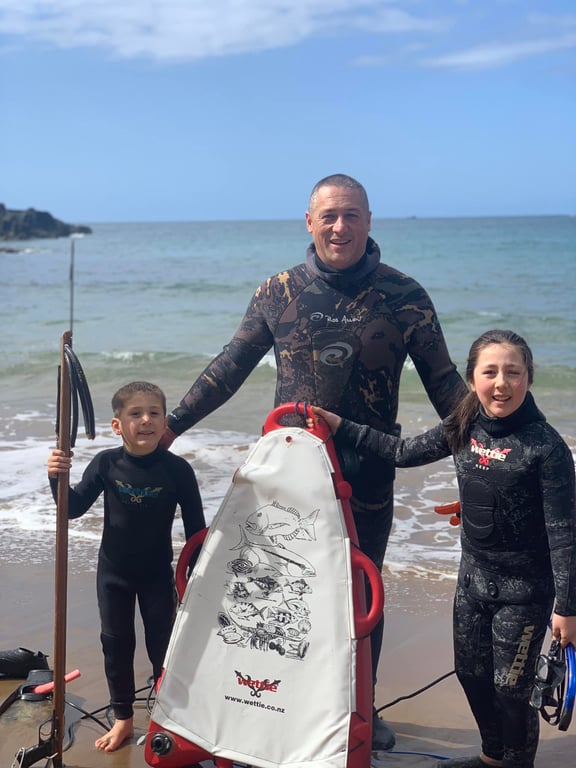
If this all sounds simple - it's because it is. But it's the difference between a close call and a tragedy. And here's the bonus: diving with a buddy is genuinely more fun. You talk about the dive afterwards, you laugh about the fish you missed, you share intelligence about good spots. You're not isolated, stressed, wondering if you'll make it back. You're part of something. That partnership doesn't just keep you safer, it makes the whole experience better.
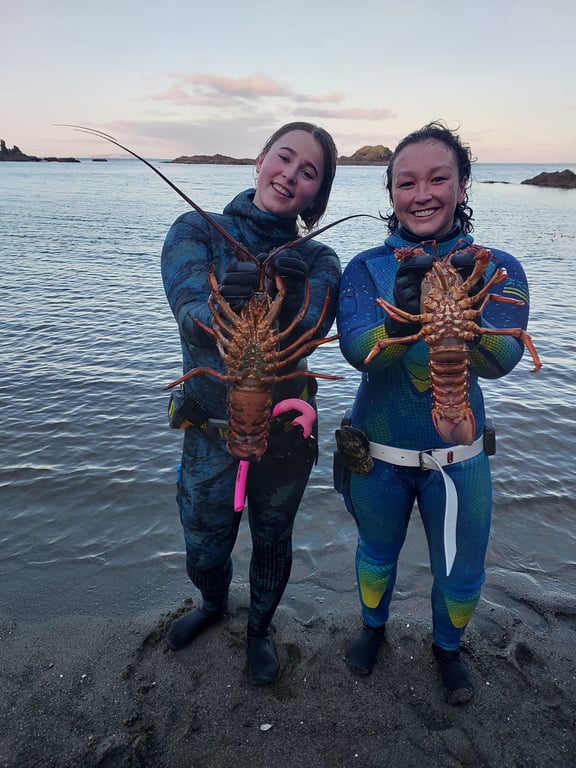
For more on spearfishing and freediving safety with Spearfishing NZ President Rob Harrison, follow the link below -