
Safer Spearos
A spearfishing safety primer from the experts
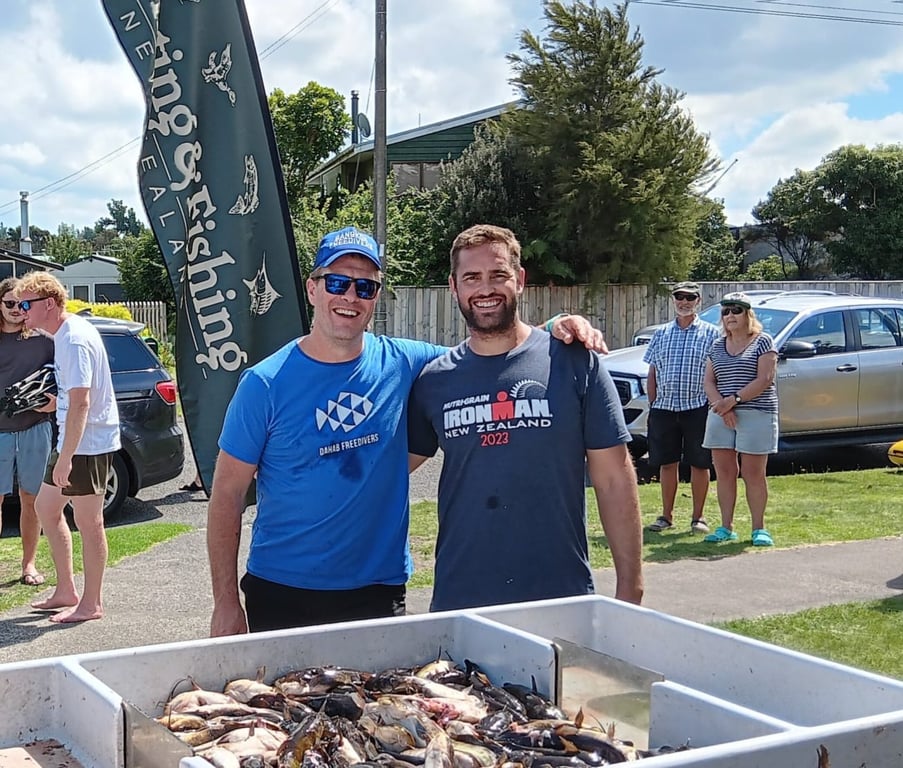

The sports of spearfishing and freediving are increasing in popularity every year. Some take to the sports for the sheer love of it, while others are keen to catch a feed for dinner or to share with friends.
Few Kiwis are as clued up about spearfishing than Rob Harrison, President of Spearfishing New Zealand. Over the years the founder of Spearfishing Fundamentals, AIDA Master Instructor, diver and former underwater hockey player has seen it all - including some things he wishes he'd never seen. These are his top tips for staying safe in the water - no matter how good you are, or how long you've been doing it.
Summer may feel like a distant memory, but there's still plenty to see and do if you're keen on braving the chillier waters over the next few months. Whether you're a seasoned pro, it's been a while since you donned your mask and fins, or you're picking the sport up for the first time, following some basic rules will increase your chances of having a great, safe experience you'll want to repeat for many years to come.
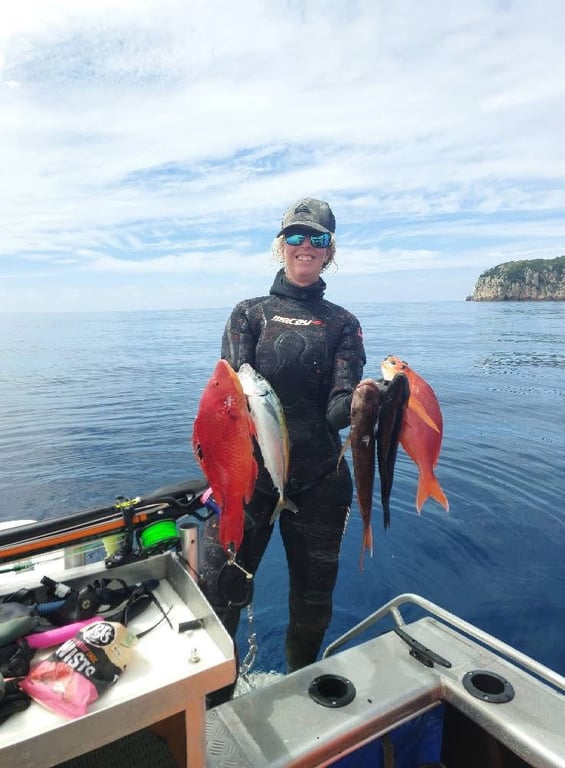
Spearfishing has never been more popular in Aotearoa. More Kiwis than ever are heading into the water for food, sport and the sheer joy of being there. That growth is something to celebrate, but it does come with a note of caution. Water Safety New Zealand reports an average of eight people die each year in snorkelling, diving and freediving incidents, and an increasing proportion of those deaths now involve breath hold divers. The good news is that nearly all of them involve a small number of preventable factors. Get the basics right and your odds are excellent.
Here are the essentials every spearo should keep in mind, whether it is your first season or your fortieth.
Dive with a buddy - and actually watch them
Diving alone is the single biggest risk factor in NZ freediving deaths. A peer reviewed study of 38 NZ snorkelling and breath hold fatalities between 2007 and 2016 found two-thirds of victims were diving solo or were not being observed by anyone out of the water. In every single case where hypoxic blackout was the likely cause, the diver was not practising "one up, one down".
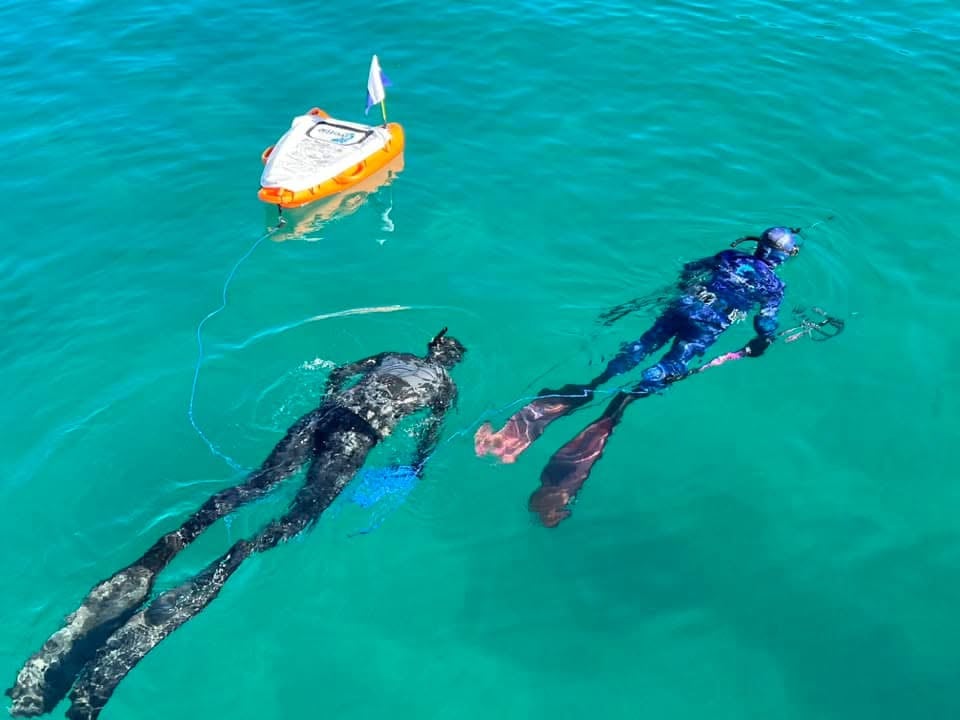
It is no coincidence that since NZ competitions switched to a pairs format in the 1990s, we have not lost a competitor. The rule is simple: while one diver is down, the other watches from the surface, follows them visually for the last few metres of ascent, and confirms a clean recovery breathing cycle for at least 30 seconds. Buddy diving does not mean two people in the same general patch of ocean — it means active observation, every dive.
Mind your surface interval
The most important feature on any dive computer for a spearo is not depth, it is the timer between dives. Standard freediving guidance is to rest at least twice the duration of your dive before going down again, and to extend that further as your dive times grow. CO₂ does not fully clear in 30 seconds, nor are you fully oxygenated, and chronic short surface intervals are a quiet, invisible road to a blackout you will not see coming. Surface intervals cost nothing, and a calm minute on the float means you will dive better, see more and last longer through the day. Set the timer. Use it.
Be fit to dive
Spearfishing looks gentle from the surface. It is not. A reasonable day on the gun can mean six or eight hours of cold water, repeated breath holds, kicking against current and hauling fish, all while making real-time decisions. The cardiac contribution to NZ underwater fatalities is significant, with nearly half the cases in the 2007–2016 study showing cardiac factors at play. The principle is simple: be fit to dive, do not use diving to get fit. Build an aerobic base before the season, keep an eye on your weight, and if you carry health risks or have had COVID badly enough to need oxygen or hospital care, see a doctor before you load up the boat.
Get your kit right - and check it works
You do not need top-end gear to start, but you do need the right gear in working order. A wetsuit appropriate to the conditions, a mask that seals, fins that fit, a dive watch with a timer between dives, and a knife you can reach quickly are the basics. A float and proper dive flag are nonnegotiable in NZ waters, they keep you visible to boats and give you somewhere to rest. One of the most important pieces of safety gear you carry is a weight belt with a quick-release buckle that you can operate one-handed, under stress, with cold fingers. Practice it dry until it is automatic, then practice it again in the water. A weight belt that will not release fast enough is a problem you only discover when it is too late.
Treat your speargun like a gun
The clue is in the name. Modern roller guns have brought a step change in range and energy, and they are not always treated with the respect they deserve. Identify your target, every time, and be sure of what is behind it. In poor visibility, that is harder than it sounds: a second diver, a sharp piece of structure, the legs of a kayaker. Apply the same discipline you would use with a hunting rifle on land. Do not carry a loaded gun on the surface near other divers; do not store a loaded gun on a boat or in a bag. Once a spear leaves the muzzle, it does not ask questions.
Check the weather, then check it again
Weather patterns are more changeable than they used to be, and forecasts have a shorter useful horizon. Bigger boats and longer ranges mean more divers are travelling well offshore, a lot more people are now making the run to the Three Kings, for example, and the consequences of getting caught out have stretched in proportion. Build margin into every trip: read more than one forecast, have a Plan B, carry plenty of fuel, and check your comms before you leave home. Out wide, your safety net is your preparation and your crew. Help is at least an hour away, if at all!
Share the water with the sharks
A few things have shifted in our waters. Protection of white sharks since 2007 means there are more of them around, I personally saw one at a spot I often dive a month ago. Bronze whalers are common and confident and getting more and more used to spearos as a free source of food. Warmer water temperatures mean more sharks are active for more of the year, and they are getting used to seeing us in the water. None of this is a reason to stay out of the water. It is a reason to dive smarter: use a float boat to get your catch out of the water and onto the deck quickly, handle fish cleanly, and work as a pair to land what you have shot. If something does turn up, stay calm, stay vertical, keep eyes on it, and if uncomfortably, exit the water together.
Don't let social media be your safety briefing
Instagram and YouTube have done amazing things for the sport. They have inspired thousands of new spearos and made gear and techniques more visible than ever. But what you do not see in the highlight reel is the 90% of dives that did not produce the cover shot, the buddy who was just off camera, and the routines that kept everyone safe. What does sometimes get normalised, solo diving, night diving, deep diving, is significantly higher risk than most viewers are equipped for. Watch and learn, but do not mistake the show for the syllabus.
Get trained, and join a community
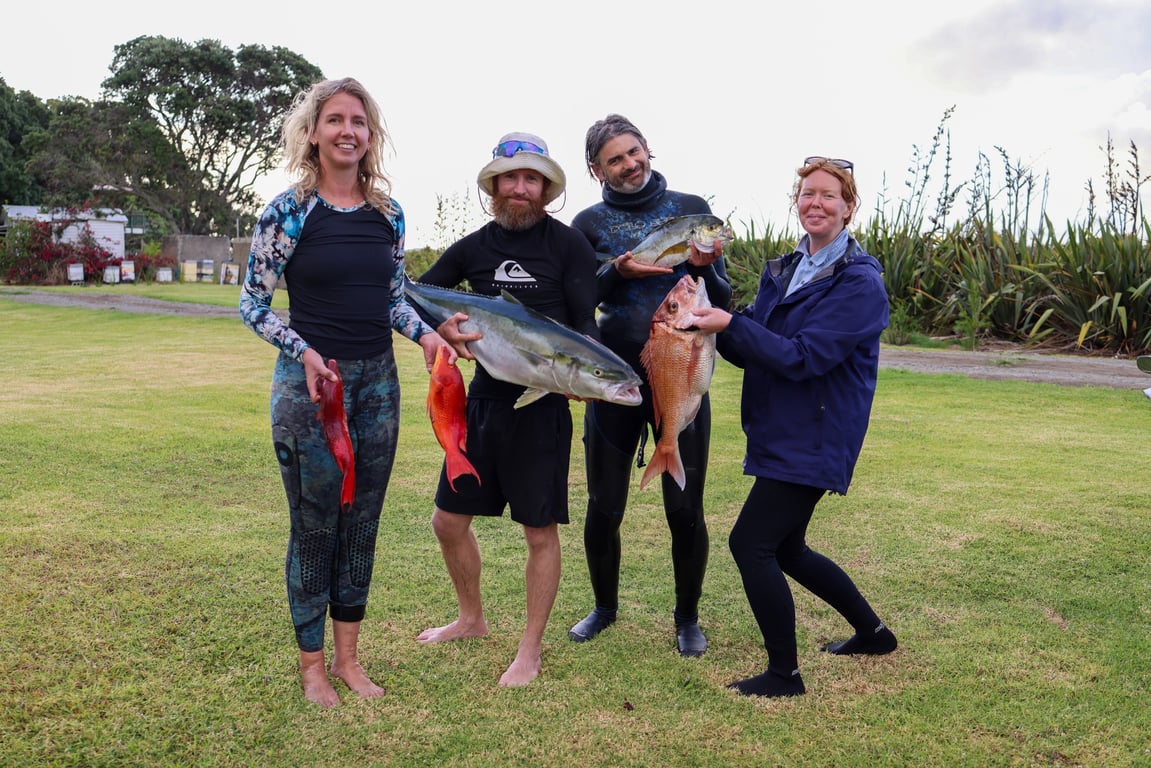
The fastest way to dive safer is to learn from people who have been doing it for years. Take a freediving course, AIDA, Molchanovs and PADI Freediver are all good starting points, and even one weekend with an instructor will change how you think about apnea, recovery and rescue. Join a club. Use the community. The Spearo Forum, the Spearfishing New Zealand website and facebook page, local club pages, and the Spearfishing Fundamentals Facebook group are all good places to find buddies and ask questions you might be too shy to ask in person. Do a comp: strong safety culture is built into our better events, you will meet people fast, and there will always be someone watching your back.
When in doubt, slow down
Every issue above is manageable on its own. The risk multiplies when they pile up: new spot, new gear, marginal weather, fish in the water, a bit too much sun, not enough food, a mate having a tough day. Cognitive overload in a complex environment with many moving parts equals mistakes. Aviation has known this for decades, and we can borrow the lesson. The single most useful safety habit I know is this: when something feels off, slow down. Have a feed. Talk to your buddy. Rerig if you need to. Ask whether you actually need to do the next dive in this exact spot at this exact time. The fish will keep. Park the ego.
We have one of the best spearfishing playgrounds on the planet, and a community capable of looking after itself. These habits are how we make sure the people enjoying it now are still enjoying it in 20 years.