
Exotic caulerpa seaweed update
An update on the exotic caulerpa incursion in northern North Island waters, five years on.

New Zealand is heading into its sixth summer with the invasive seaweed exotic caulerpa in North Island waters.
In this article, Biosecurity New Zealand gives an update on this pest seaweed and the programme to manage it.
Since the first detection at Aotea Great Barrier Island in July 2021, exotic caulerpa has now been found in multiple locations around the Hauraki Gulf, in the Coromandel, the Bay of Islands and, more recently, Whangārei Harbour.
Over the past five years Biosecurity New Zealand (part of the Ministry for Primary Industries) has mounted New Zealand’s most significant marine response ever. This has included spending more than $30 million dollars on research to understand this pest, develop treatment tools and contain its spread.
We’ve worked closely with local councils, mana whenua, communities, the Department of Conservation and scientists. Together we now have a national strategy for its long-term management, based around regional and local action with national support.
While the number of infested locations has increased, we are no longer seeing the extensive, multi-hectare carpets of the early years. This is the result of significant die-back that took place over the course of a year from late winter 2024. This saw reductions down to as little as 5% at several previously heavily infested sites. Some regrowth has happened since, but the caulerpa is now generally sparser, even within new detections. We are closely monitoring and researching the causes and drivers of these population dynamics.
RESEARCH INSIGHTS
Divers will want to know – how is exotic caulerpa affecting our diving? Is exotic caulerpa having a major effect on the underwater environment and ecosystems?
Research in the past two years indicates that sparse growth, as is currently present, is having minimal immediate negative impact. Abundance and diversity of the small creatures (macroinvertebrates, including snails, worms, nymphs and larvae) is similar in areas where exotic caulerpa is growing to where there’s mainly seagrass or native algal turf. Also, sediment cores have shown a high diversity of tube worms where dense beds of exotic caulerpa had previously existed and since died back. Early findings also suggest the habitat for scallops has largely recovered in areas where exotic caulerpa was previously dense and they are successfully reproducing.
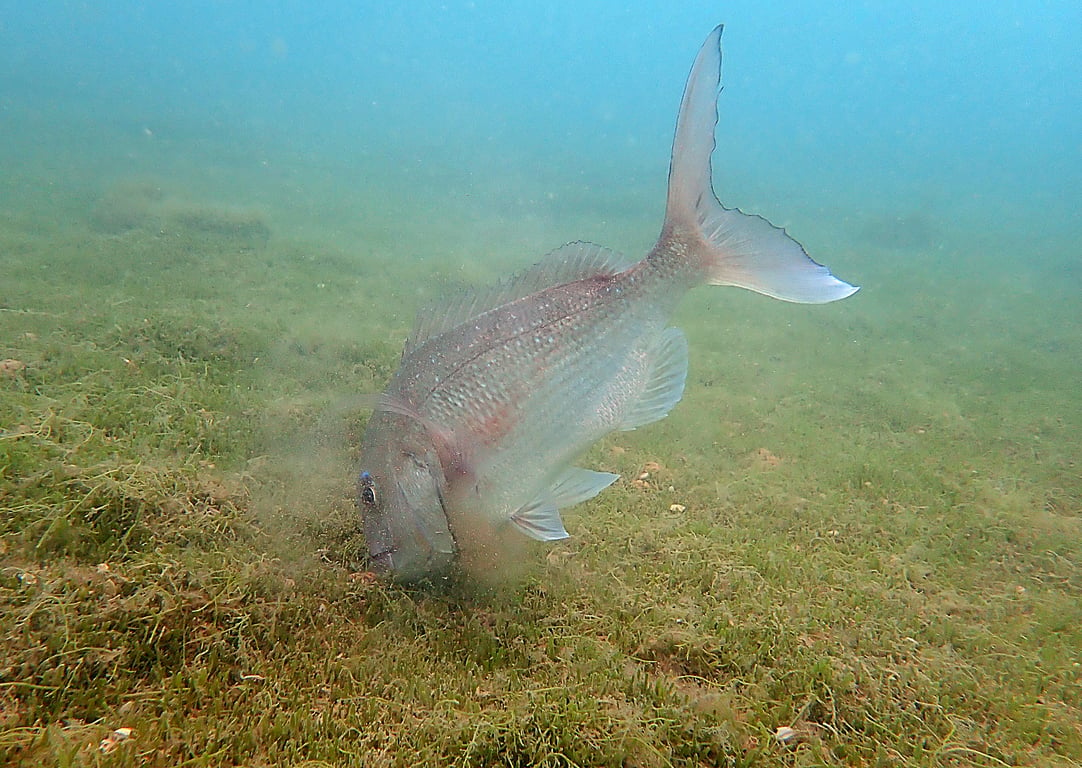
The strongest evidence of negative impacts that we currently have relates to juvenile snapper behaviour. Research found that young snapper avoided areas of seagrass where exotic caulerpa was mixed in. Further research is critical to understand the consequences of higher density or large-scale areas of exotic caulerpa growth and whether exotic caulerpa is able to outcompete healthy seagrass.
At the same time, we now have a range of tools that have been tested that can be used to kill exotic caulerpa, but it is a case of making sure we use the right tool in the right place. The tools range from benthic mats to diver-assisted suction dredging, the Rehabitat chlorination chamber, a UV-C light array and a large submersible dredge planer.
Sometimes people suggest that invasive species like exotic caulerpa are taking advantage of damage caused by sediment pollution, dredging or bottom trawling, or storms. However, our research is showing exotic caulerpa tends to prefer habitats that are not particularly high in fine sediment, and it prefers good water clarity. It may quickly invade new space if other species are removed , but it’s unlikely to be found in muddy or high-sediment areas.
Biosecurity New Zealand’s assessment, along with advice from scientific experts, is that exotic caulerpa cannot be eradicated from New Zealand waters using current technologies. This is because it breaks up very easily into fragments that can survive and establish elsewhere, its broad distribution, the cost of using the treatments, and the possible impact of these control methods. However, we can realistically contain it to some locations if they are found early, treat high-value areas and generally slow its spread. This will limit impacts while further research and tool development is done.
WHAT DIVERS CAN DO
There are two ways divers can help.
Check and remove any seaweed off your dive and fishing gear every time before moving, and if you’re on a boat, the anchor and chain. Bag any seaweed you find for disposal onshore. Keeping your gear clean of seaweed is a great precautionary approach that could be normal, everyday practice for the diver community across New Zealand.
Reports of any sightings of exotic caulerpa are useful. Use the QR code to get a guide that shows what it looks like and how to report it.


Read more from
Biosecurity New Zealand
Working to protect New Zealand's boating, fishing and diving paradise from biosecurity threats.