
The magic of coral
What makes Wakatobi's coral different from any other?
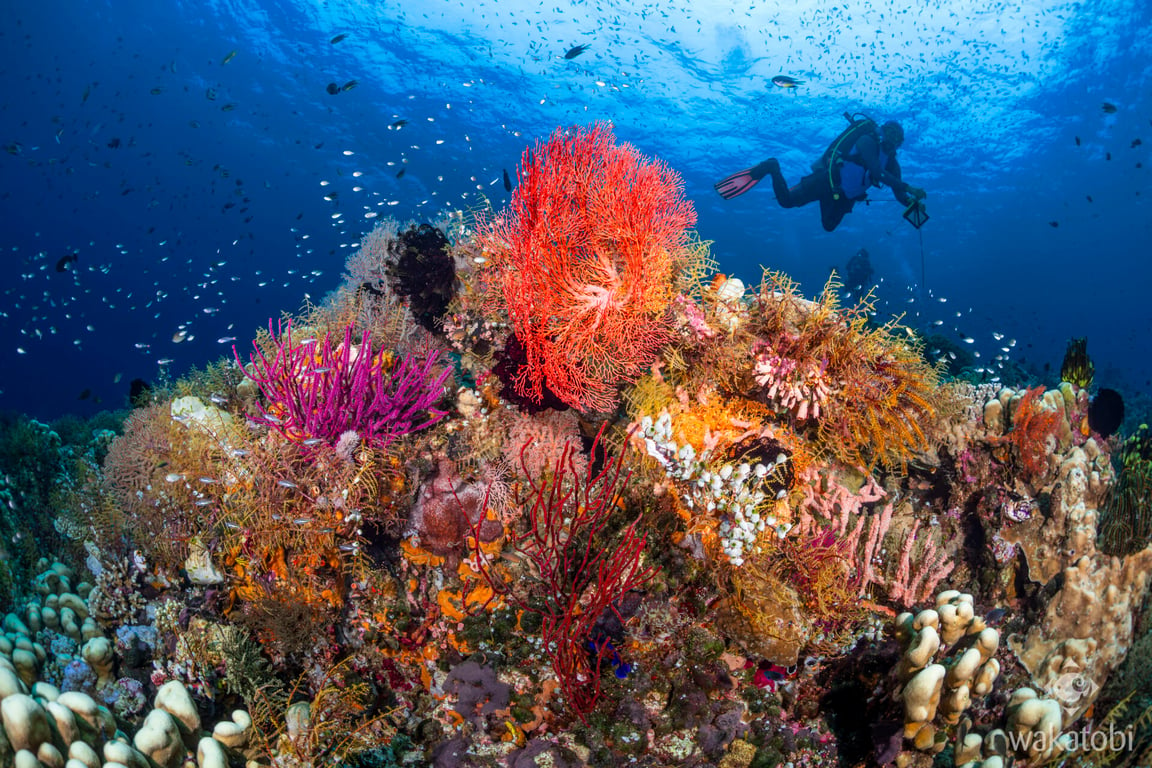

Floating among Wakatobi's coral reefs is a bucket list event for many divers. The multitude of variety and colour of the corals, and the teeming fish of all shapes and sizes in this astonishing ecosystem leave even the most experienced of divers lost for words.
For conservation enthusiasts worldwide, Wakatobi is a living representation of what corals can be. What was once an overfished ecosystem has, through thirty years of sustained care, become one of the world's last great ocean frontiers.
Heading in the right direction
At a time when many of the world's coral reef systems are in decline, Wakatobi's are bucking the trend, getting healthier and fishier every year. Marine biologist and world-renowned photojournalist Dr Richard Smith has spent years studying why. His conclusion is simple: when you protect a reef properly, and make that protection genuinely sustainable - profitable enough to endure, enjoyable enough to sustain - nature will do the rest.
Hard and soft corals
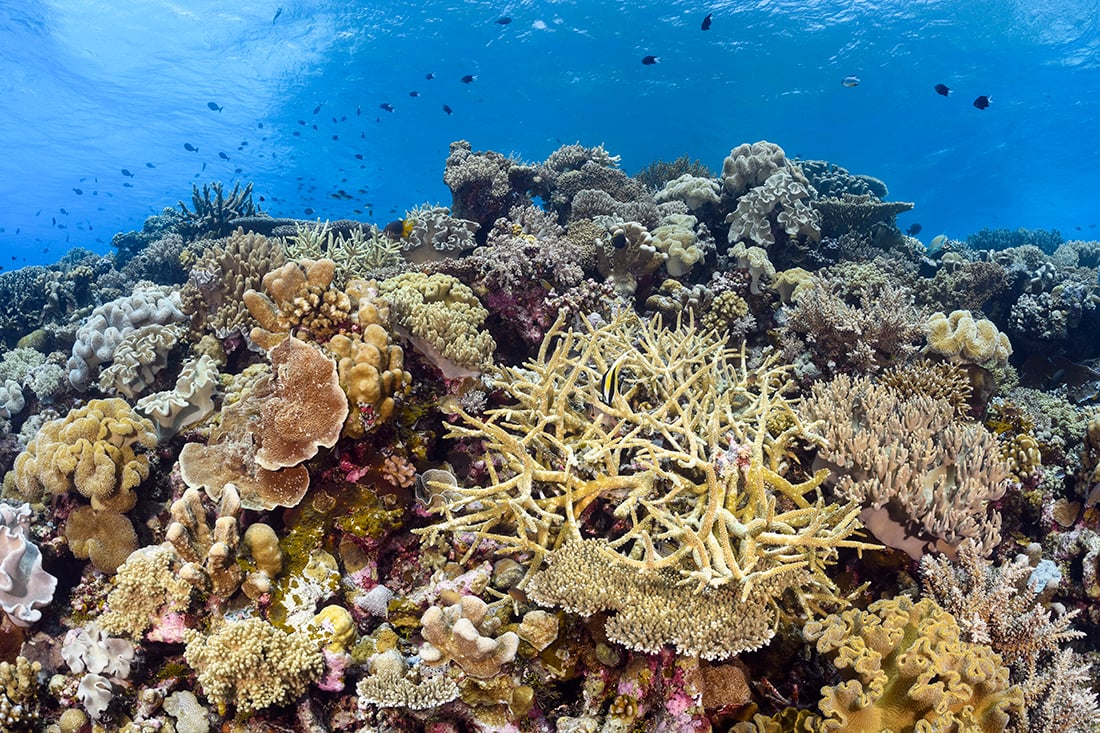
Corals fall into two general categories: hard and soft.
Hard corals form the foundation of a coral reef, much like concrete forms the foundation of a house. Everything else - the soft corals, sponges, and the vast communities of fish and invertebrates - depends on the existence of the hard structure.
Despite their plant-like appearance, corals are animals. They live in colonies within hard shells of calcium carbonate, which they secrete to provide protection. Their ability to obtain nutrients in two different ways allows them to thrive in the clear, sunlit waters surrounding Wakatobi.
Reef-building corals are very particular about where they choose to settle. They need warmth, clear water, steady salinity, hard surfaces and plenty of sunlight. In much of the ocean these conditions rarely align, but in Wakatobi's waters, they do, consistently. That consistency goes a long way towards explaining what divers find when they descent.
To harvest the energy of the sun, hard corals cultivate a type of symbiotic algae known as zooxanthellae. These microscopic algae live within the coral's tissues, where they photosynthesise in sunlight and produce much of the food their host needs to survive. In return, the coral directs its own waste products to the algae, acting like a fertiliser.
The feeding polyps of hard corals are equipped with small tentacles that give them a flower-like look, which extend out of their protective shelters to capture nutrients that float by. You are more likely to see these polyps extended at night, as this is when a feeding coral is less likely to be nipped by a hungry fish.
While the hard corals are the reef's builders, it is the soft corals that enliven reefs in waves of undulating colour. Whereas hard corals build rigid calcium carbonate skeletons, soft corals are supported by tiny siliceous spicules. This allows them to grow outward into fan-like shapes with large surface areas.
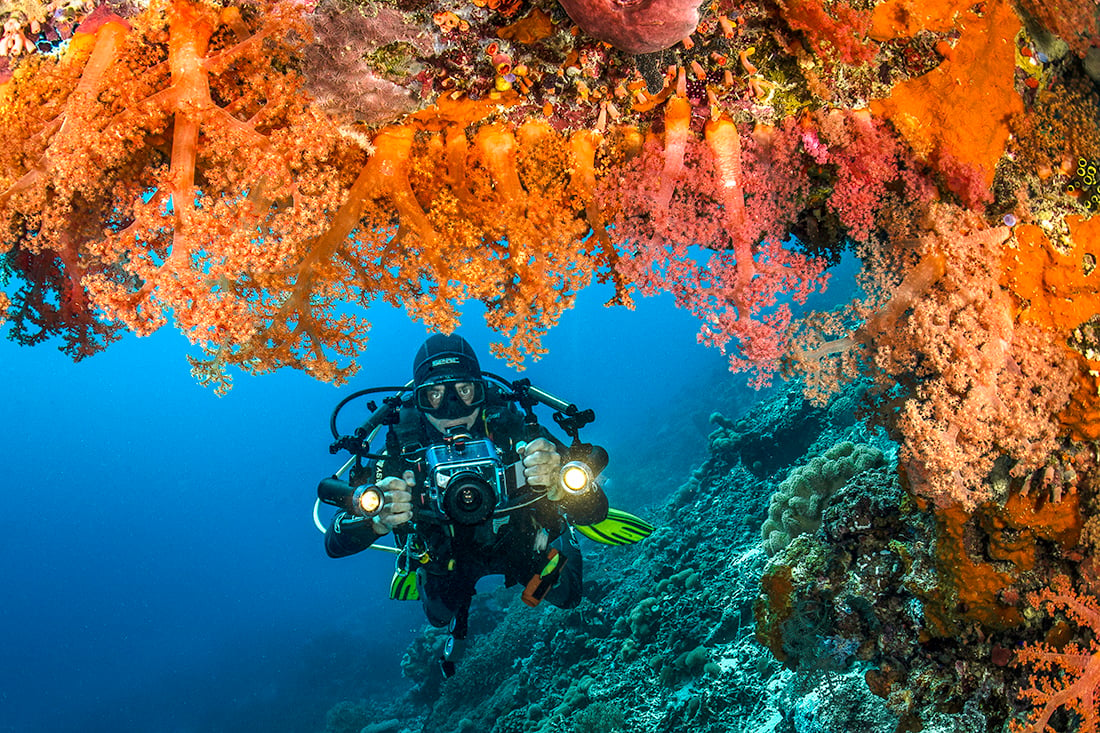
Unlike hard corals, whose growth depends heavily on sunlight, soft corals feed on organic matter suspended in the water column. When the currents are running, soft corals feed on organic matter suspended in the water column. When the currents are running, soft corals swell and their polyps begin to trap suspended particles.
As a result, they thrive in stronger currents, tolerate turbid water, and don't depend on abundant sunlight. This is why you'll often find enormous sea fans, long whips of wire coral, and tree-like colonies of black coral as you descend deeper into the reefs.
For more on Wakatobi's corals and underwater treasures, visit wakatobi.com
Read more from
Wakatobi Resort
Experience Wakatobi, a world-renowned dive and snorkel destination in a tranquil island setting and a pristine natural environment, far from crowds. Blending refined comforts with its surroundings, the resort provides spacious, air-conditioned ocean-front villas and bungalows with Wi-Fi, and all-inclusive, chef-prepared meals. Regardless of its remote location, exceptional comfort and convenience are paramount.