
Safer Wreck Diving
The irresistible pull of a shipwreck offers unique challenges - and risks
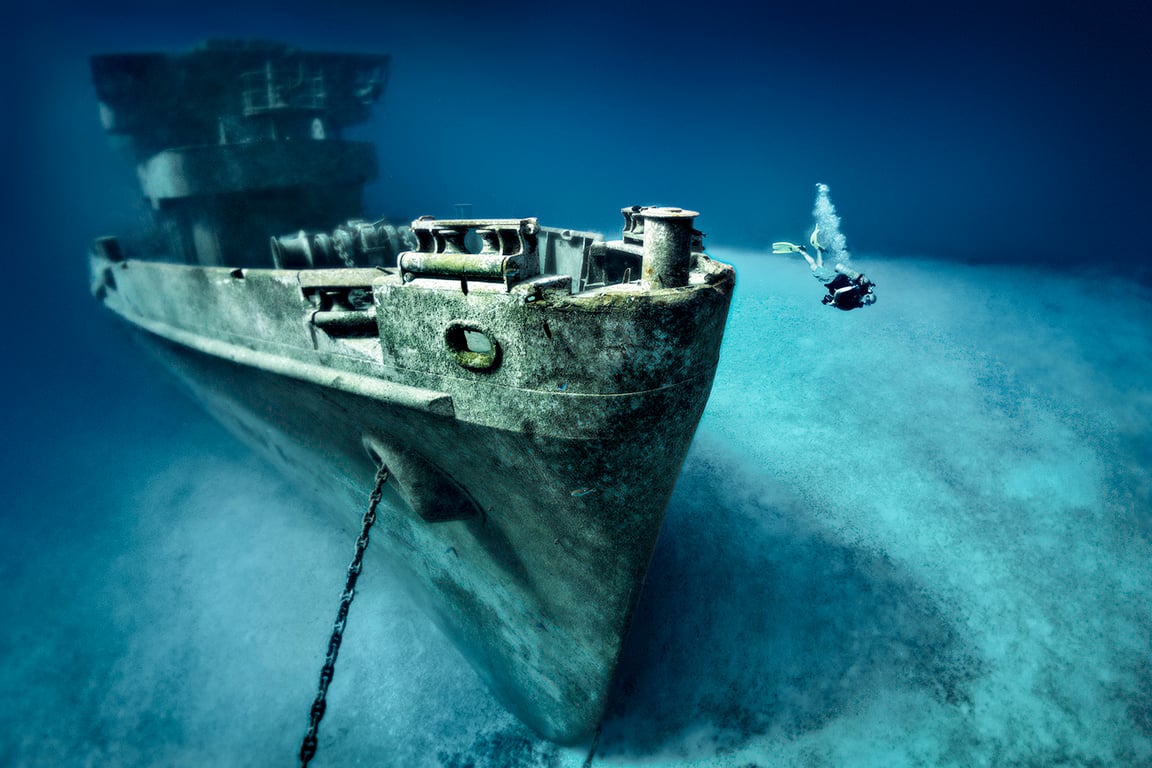

There's something about shipwrecks that makes them irresistible to divers. No matter how big they are or how they sank, wrecks offer a unique challenge and a glimpse into history, and it’s easy for wreck diving to become an obsession. For many divers, the challenge and the risks that come with it are part of the appeal. Here are some safety considerations:
Sea Conditions
Shipwrecks exist because at some point conditions on the surface were less than optimal. Some of the most interesting historical wrecks are situated in the most challenging dive conditions for this reason. For divers this means that high currents, surges, unpredictable weather and heavy seas should be expected on the way to a deep wreck.
With proper training, preparation and experience it’s possible to safely dive in these conditions, but they will always be physically challenging and require a careful approach. A giant stride from a rocking boat can be daunting, but most injuries occur while getting back on board after a dive. Fighting your way up a traverse line, avoiding a bucking stern and catching a ladder between wave crests can challenge the most experienced instructor and easily overwhelm divers who may not know where the limits of their abilities are.
Dive instructors can minimise the risk to students by conservatively evaluating sea conditions and student fitness and teaching them to maximise their efficiency in the water. Pulling yourself along a line rather than kicking, avoiding unnecessary equipment to reduce drag, and minimising time spent on the surface in heavy seas can reduce overexertion and injury and make the dive more enjoyable.
Rusty metal and entanglement hazards
Even if you never enter an overhead environment, shipwrecks pose a host of hazards. Entanglement, razor-sharp edges, disorienting corridors and silt are common hazards even on the cleanest wrecks.
Entanglement is a leading cause of death among experienced technical divers. Ceilings and walls in deteriorating wrecks can collapse without warning, errant fin kicks can eliminate visibility, and jagged metal edges can slice even the best-laid lines. Buoyancy and trim should be second nature before a diver considers an advanced wreck course, as these are not skills you can afford to take for granted.
Getting back on board
It’s common for new divers to lose focus during ascent; instructors spend days teaching students about the hazards of deep diving and shipwrecks, and they may focus intently on the wreck and lose sight of the second half of the dive. Managing a safe ascent rate, effectively signalling the dive boat and negotiating your way back onboard can be just as challenging as reaching the wreck - sometimes more so.
Students should be taught to dive their plan, control their ascent and come prepared to deal with a lost-boat situation. Signal mirrors, dye packets, surface markets, radio beacons and whistles should be considered by wreck divers of all levels.
Click here for more on DAN World and its programmes and services.
Read more from
DAN World
Divers Alert Network (DAN) is the world’s most recognised and respected dive safety organisation, having remained committed to the health and well-being of divers for 40+ years.