
Pan Am Clipper Endeavour discovered after 74 years
The wreckage was found 610m below sea level off the Puerto Rico coast
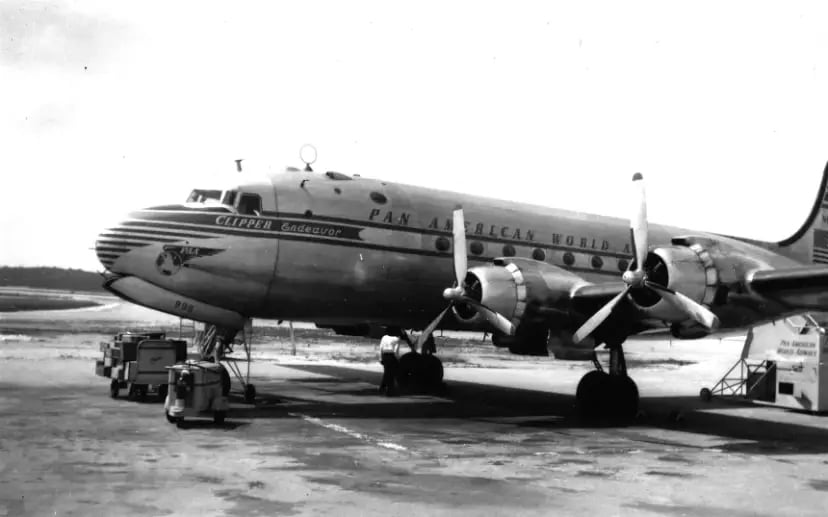

Seventy four years after a Pan Am flight crashed into the water off the coast of Puerto Rico, killing 52 people and prompting sweeping reforms including passenger safety briefings, explorers have discovered the wreckage of the Clipper Endeavour at the bottom of the Atlantic Ocean.
The Air/Sea Heritage Foundation, in partnership with others, including the Discovery Channel's Expedition Unknown show, found the wreckage in June, off Puerto Rico's northern coast.
The discovery, which involved the use of an autonomous underwater drone, ends decades of speculation as to what happened to the Douglas DC-4 aircraft after it crashed into the ocean on April 11, 1952, shortly after taking off from Puerto Rico.
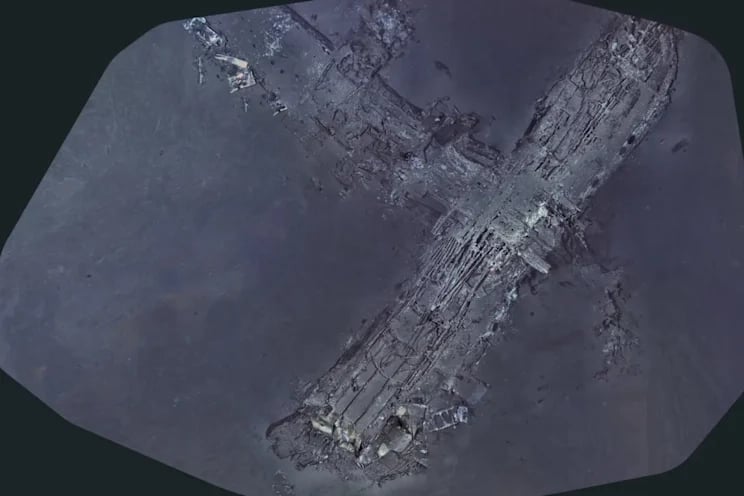
The search team, which included the Deep Sea Vision company, used high-resolution sonar to locate the wreckage on the ocean floor. By chance, a research vessel with one of the world's most leading-edge sonar systems had passed right through the team's narrowed search zone and agreed to stop for 48 hours to help with the search.
"It went down for about 30 hours and scanned the sea floor in our target area, came back to the surface and there it was," said Josh Gates, host of Expedition Unknown. The plane was broken into two sections. A follow-up photographic survey conclusively identified the plane, with images clearly showing the Pan Am logo and aircraft name still legible.
Catalyst for change
The plane had lifejackets and personal flotation devices for everyone aboard, according to the Pan Am Foundation. It was carrying 64 passengers and five crew members when it suffered multiple engine failures and crashed shortly after takeoff from San Juan-Isla Grande Airport. But no safety briefing had been given, there was a language barrier, and there was no coordinated evacuation procedure in place.
The 17 survivors - 12 passengers and five crew members - told investigators that everyone survived the plane ditching into the sea, but panic set in, and many passengers were scared to leave the aircraft as they struggled to find lifejackets, and the crew had difficulty deploying life rafts.
As a result of this crash, the Civil Aeronautics Board (a predecessor of today's Federal Aviation Administration) proposed amendments to civil air regulations. The talks that flight attendants now give at the beginning of every flight, demonstrating how to find and inflate a lifejacket and life raft, and find the emergency exits, were developed after PanAm Flight 526A crashed shortly after takeoff from San Juan-Isla Grande Airport in Puerto Rico on April 11, 1952.
"Every time you step on board an aeroplane today, you are safe because of what happened to the Clipper Endeavour, and her passengers three-quarters of a century ago," says Gates.
Read more from
Dive Pacific
Dive Pacific is the media arm of the New Zealand Underwater Association