
Giant Australian cuttlefish mating season disaster
Harmful algal bloom thought to be behind decline
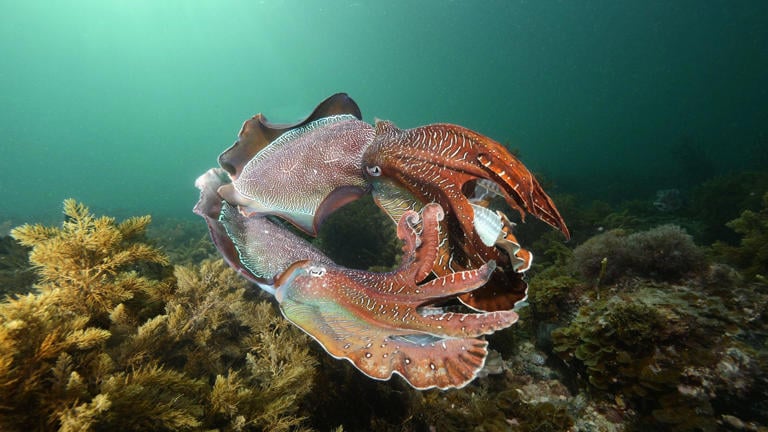

Every winter, the Cuttlefish Coast in South Australia is where one of the world's most extraordinary wildlife events occurs: the world's largest giant cuttlefish mating event. Each year, hundreds of thousands of these colourful marine species amass for the mating season in Spencer Gulf near Whyalla, showing off their unique shape-shifting and colour-changing skills in the shallow waters, attracting divers from all over the world.
But this year, the turnout from these extraordinary creatures was the lowest on record, with an estimated 1,811 cuttlefish turning up to mate - a 'catastrophic decline' of 97 per cent from 63,000 last year, leading to calls for the species to be listed as endangered.
Instead of the millions of eggs that are normally laid, just 440 eggs have been counted in recent months.
Adult cuttlefish only live for around 12 to 18 months, and typically die after breeding.
Scientists and conservationists are working to understand why there's been such a dramatic change in behaviour, but it's believed a toxic algal bloom that has ravaged the coastline for more than 18 months may be to blame for the sharp decline. Other potential culprits include warming sea temperatures, water quality issues, and disruption to the marine ecosystem.
Manny Katz, 28, was one of four divers tasked by South Australia's Department of Environment and Water (DEW) to observe the annual breeding event. Over two days in July, his team did eight one-hour dives, exploring the undersides of rocky reefs to count the eggs.
"Because there have been so few cuttlefish, DEW thought it would be worth going out and trying to do an assessment of how many eggs there currently are around the coastline to understand what the population is going to be next year," he told the BBC. "Along the eight kilometres of coastline, there would normally be millions of eggs. [We] pretty much looked under every single rock that we could have and we only found about 440 eggs."
Because cuttlefish only live less than two years, the success of one breeding season determines the following year's population. "Under our current circumstances, with there being so few eggs along the coastline, we don't know if the population is every going to be able to recover."
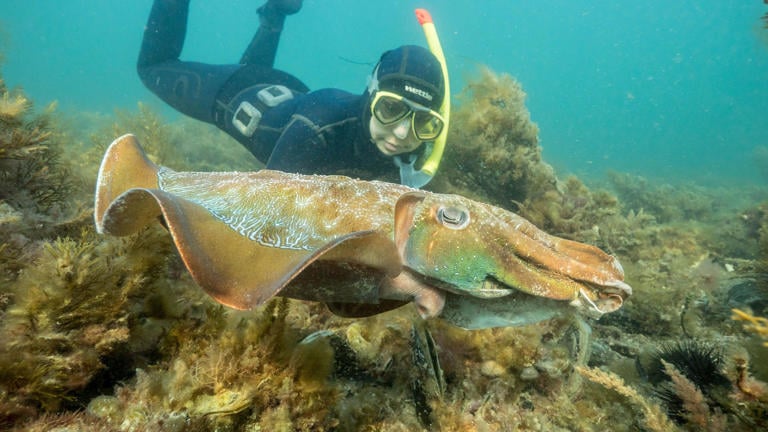
Katz's team also tracked adult cuttlefish numbers during the dive survey, and said the dozen or so they saw - instead of the usual tens of thousands - seemed to be behaving differently.
"This year, they were all really skittish - hiding under rocks. Because there's so few cuttlefish hanging out at the moment, they don't have strength in numbers."
Stefan Andrews, co-founder of the Great Southern Reef Foundation, is seeking to have the giant Australian cuttlefish listed as a threatened species due to the algal bloom.
"The harmful algal bloom is a leading plausible explanation and appears likely to have contributed, but the available evidence does not yet allow us to say definitively that it caused the entire decline," he says.
The collapse has raised urgent questions about the long-term health of the region's marine environment, and what it could signal for other species. Conservation groups are calling for increased monitoring, and research funding to track the population's trajectory and identify protective measures before next year's breeding season.
Read more from
Dive Pacific
Dive Pacific is the media arm of the New Zealand Underwater Association