
Discovering the masters of camouflage
Up close and personal with cuttlefish at Wakatobi
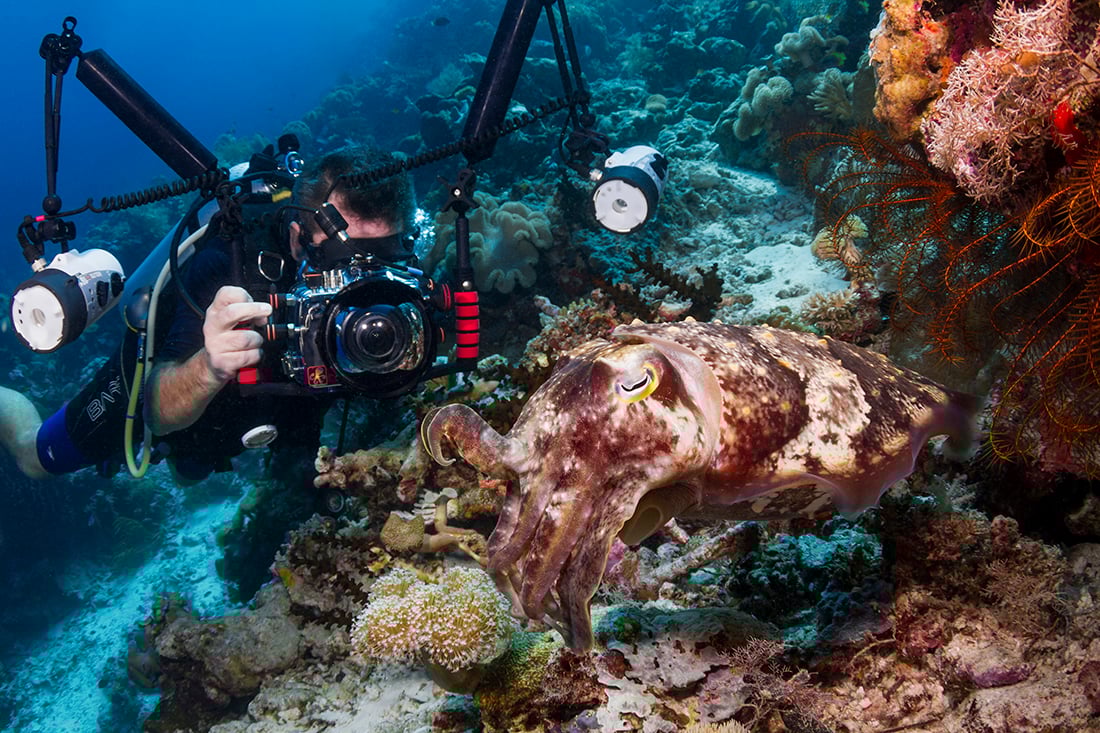

With their eight arms and three hearts pumping blue blood, you'd think cuttlefish would be easy to spot in the ocean - but these masters of disguise can be right next to you, and you wouldn't know it.
At Wakatobi, there's a chance of finding cuttlefish on almost every dive as they thrive in abundant numbers on the colourful reefs. They may be lurking close by, blending perfectly with the coral reef or a seagrass bed, but unless these cephalopods choose to reveal themselves, you could swim right by one without noticing them.
Sometimes referred to as 'the chameleon of the sea', cuttlefish have a remarkable ability to rapidly alter their skin colour and patterning - to the point that they can seemingly disappear in their surroundings, then suddenly explode in an incredible display of moving light that can hypnotise prey and signal to others of their kind.
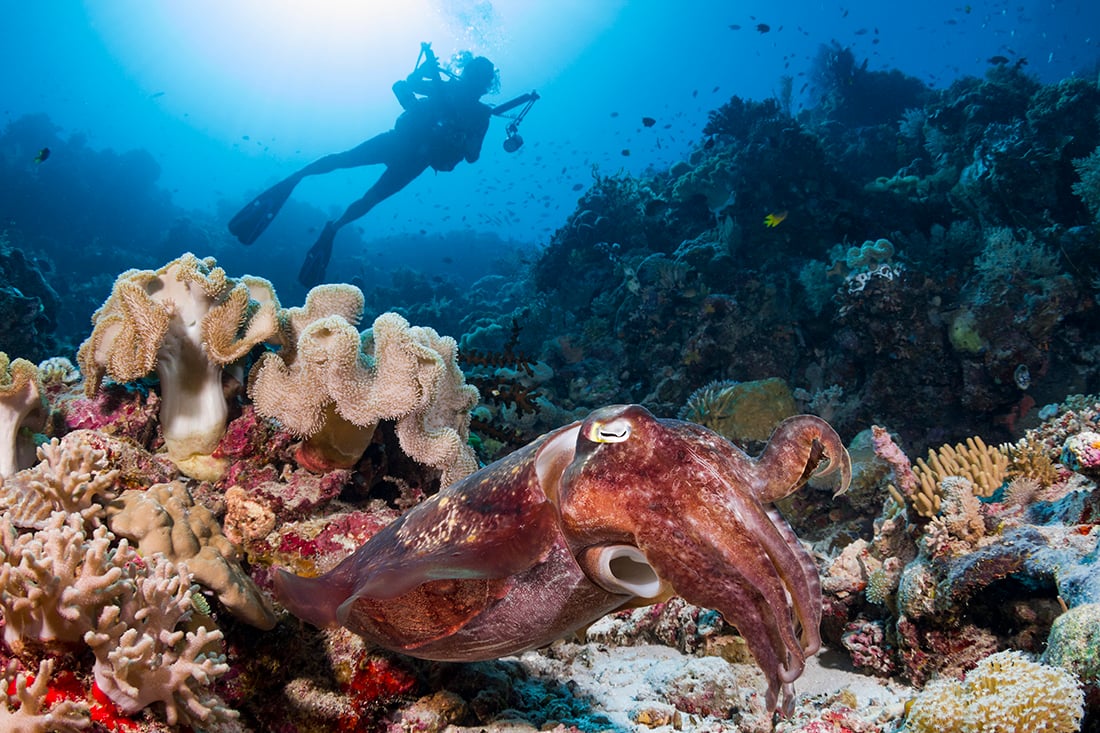
Like other members of the class Cephalopoda such as octopus and squid, cuttlefish have specialised pigment cells in their skin called chromatophores. These cells are infused with multi-colored pigment particles that are activated by the nervous system or by hormonal signals. Their skin also contains a second type of cell known as iridophores, which reflect and refract light in ways that result in silvery or iridescent colours, and make the cuttlefish’s skin appear to flash luminous, much like a strobe light.
The same chameleon-like abilities that allow cuttlefish to control their colour and skin texture and blend with the reef or sea bottom also provide them with a means of communication. These light shows can be activated to attract a mate, warn off rival cuttlefish or even stage a performance to confuse their prey. At their most spectacular, cuttlefish may cycle through color and pattern changes so rapidly that their skin will actually pulse, as if they are sending electrically charged waves of light and dark through their bodies, adjusting the rhythm from slow to fast to slow again.
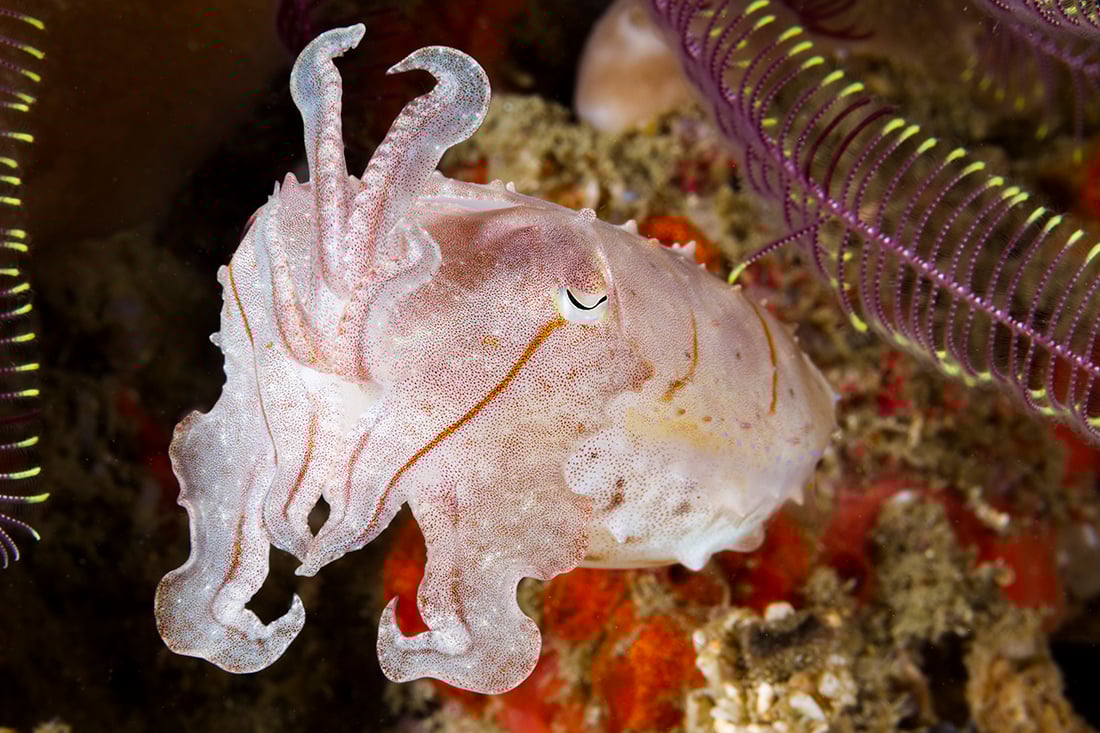
While it's very tricky to spot a cuttlefish when it's in camo mode, if they do choose to reveal themselves, they are quite hard to miss, as they'll rise up and start flashing bright colour patterns - as if you've just switched it on. If you do spot one, approach it slowly without making any sudden or aggressive moves - once it decides you aren't a threat, they may move close to you due to their natural curiosity. Look around too, as adult cuttlefish tend to travel in groups of two or more.
The most common cuttlefish at Wakatobi is the broadclub (Sepia Iatimanus), which can reach lengths of over a foot. During your Wakatobi visit, be ready for an encounter, as you never known when these beautiful hunters will reveal themselves.
Visit Wakatobi.com to discover more.
Read more from
Wakatobi Resort
Experience Wakatobi, a world-renowned dive and snorkel destination in a tranquil island setting and a pristine natural environment, far from crowds. Blending refined comforts with its surroundings, the resort provides spacious, air-conditioned ocean-front villas and bungalows with Wi-Fi, and all-inclusive, chef-prepared meals. Regardless of its remote location, exceptional comfort and convenience are paramount.