
Clean below? You're good to go!
Help stop the spread of invasive species
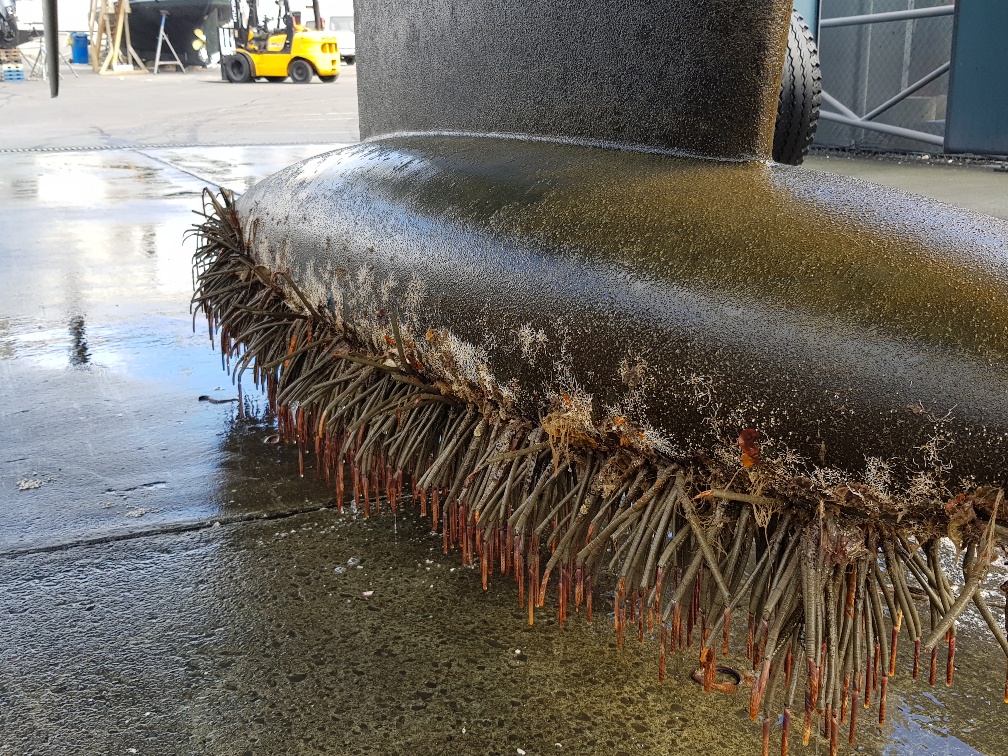

Getting out on the water is one of New Zealand's great pastimes, and one we can all enjoy. However, the balance of the ocean is a delicate one, and hull hygiene is vital to ensure our waters stay free from as many pests as possible.
Today, two almost identical species of exotic caulerpa are now known to be in New Zealand's waters - caulerpa brachypus and caulerpa parvifolia - collectively known as exotic caulerpa. These two pest seaweeds can spread rapidly, forming large underwater fields.
As of August 2024, exotic caulerpa covers over 1,500 hectares of the North Island seabed. It can compete with other species for space, and upset the balance of local ecosystems, presenting a risk to all forms of marine activities.
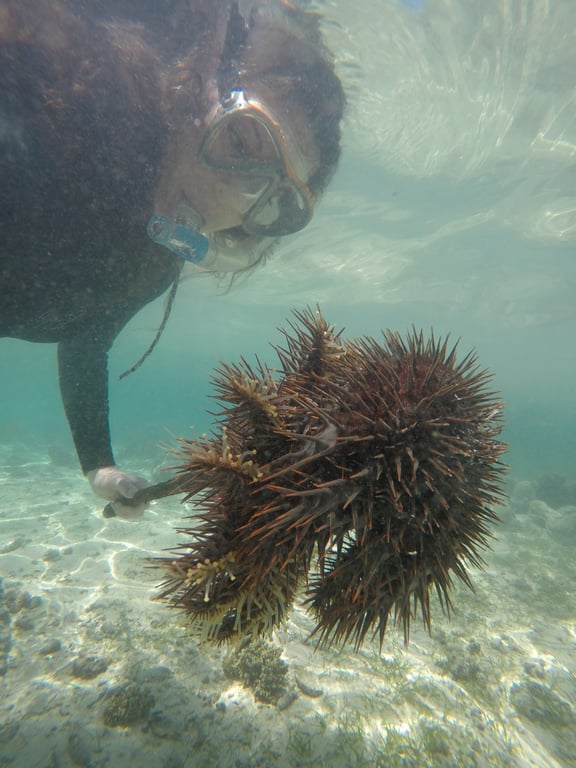
While it's not known exactly when exotic caulerpa arrived, it was first found in July 2021 at Aotea Great Barrier Island. Since then it has been found in several locations, including Ahuahu Great Mercury Island, Te Rāwhiti Inlet in Northland, Kawau Island, Waiheke Island, Mokohinau Islands, Rakino Island, Fantain Bay, Coromandel Peninsula and Omaha Cove/Leigh Harbour (this patch has been removed).
Making sure your boat is clean before travelling can be a challenge, but it's vital for marine health. A dirty hull will cost you in terms of fuel and speed, but it's also a haven for marine pest hitchhikers who travel on our hulls, anchors and equipment.
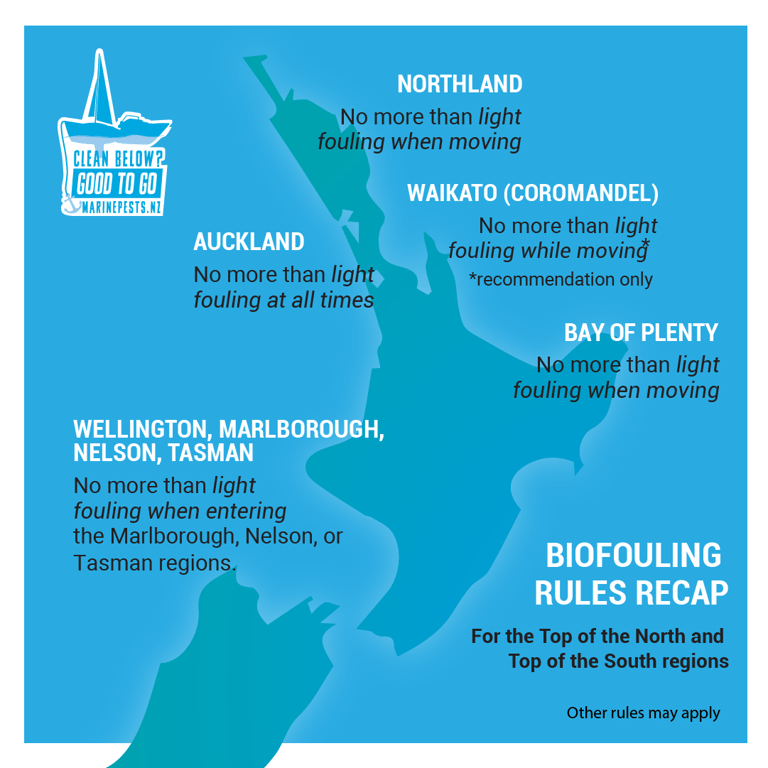
Many regions, and some marinas, have rules about hull hygiene and biofouling. Recently, restrictions related to exotic caulerpa have been added, and these affect all boats - including those on trailers - jetskis and kayaks.
To make sure you're travelling safely - and to ensure you don't get turned away from your destination, here's some useful info to help you stay on top of marine biosecurity rules.
What are marine pests?
Plants and organisms can build up on any underwater surface, causing biofouling. These marine pests can destroy rock pools, beaches, fishing grounds and kai moana like oysters and mussels. If they are attached to your vessel, they come with you everywhere you go. These include species like Mediterranean fanworm, Australian droplet tunicate and Asian kelp. Some species, including exotic caulerpa, travel as larvae, juveniles or small fragments attached to our gear. While they can disperse with the current, having them on your boat gives them a free ride to wherever you're going.
Hull grooming
If your boat lives in the water, it needs hull grooming, says Auckland Council marine biosecurity advisor Sam Happy (pictured above cleaning our waters). "This means regular hull grooming - antifouling and cleaning with special attention to props and niche areas".
While most regions' rules will differ slightly, ensuring your boat hull has no more than a light layer of slime means you're good to go. Sam recommends becoming familiar with the Level of Fouling (LOF2) scale, which is now in wide use throughout New Zealand. "If you're getting close to LOF2, it's time to arrange a clean, making sure you pay attention to those hard-to-get spots like the keel bulb and intakes that can be easy to miss."
Marina rules
Many marinas, including those in Northland, the Coromandel and Bay of Plenty may ask you to take extra steps. For example, Whitianga Marina has strict rules which help keep Mediterranean fanworm out. To visit these marinas you may need to provide evidence (receipts) of either an antifoul within the past six months, or a lift-and-wash within a month of leaving an area affected by marine pests. They may ask for details of recent trips, and even ask you to haul out on arrival.
Check your gear
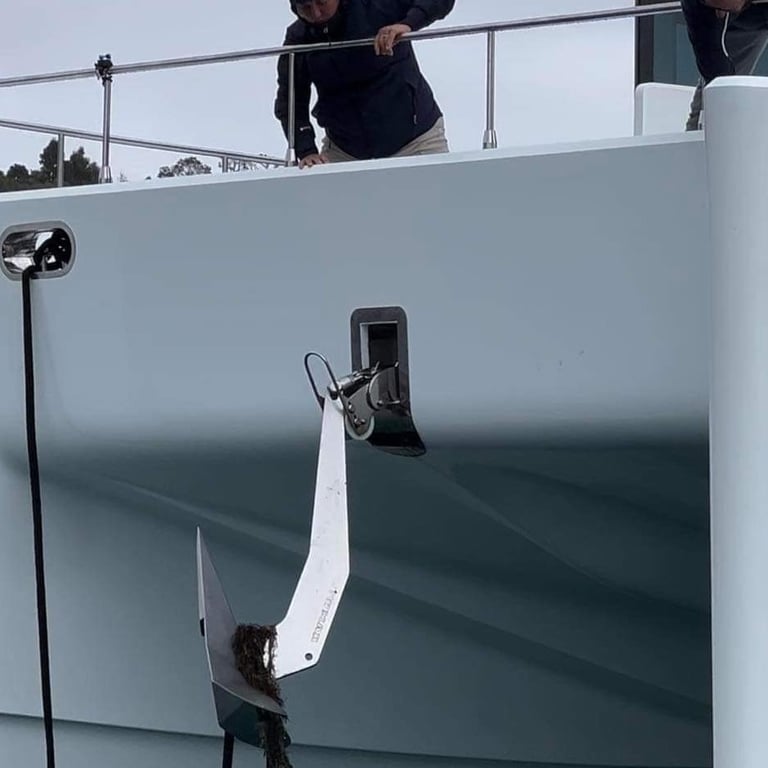
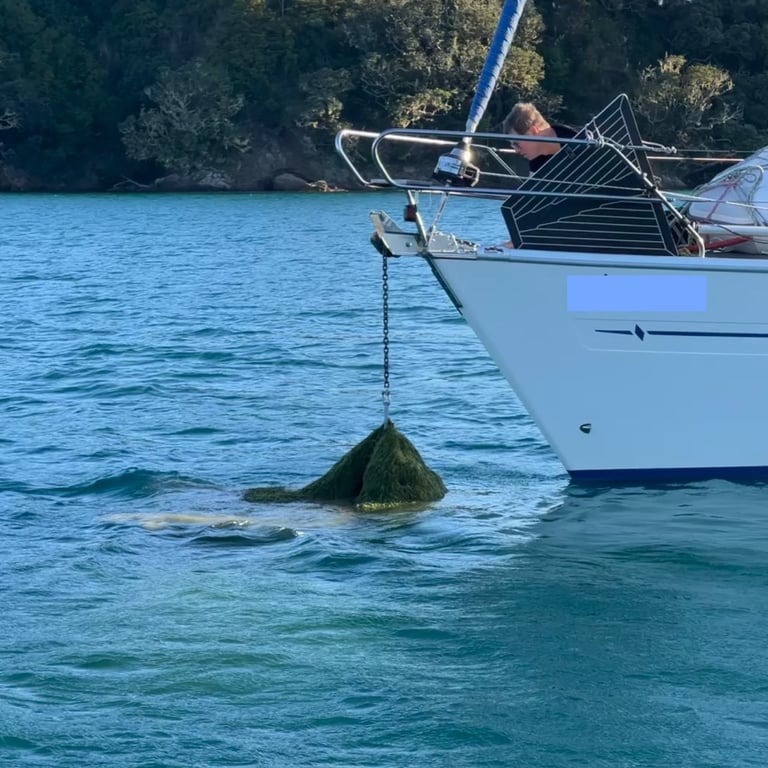
Marine pests don't discriminate on vessels - they can travel on any in-water gear and equipment. Check your anchor, chain and gear for any weed before moving locations, and if possible, bag and bin anything found; if that's not possible, drop it before moving.
"If you're visiting anywhere near where exotic caulerpa has been found, please do some research so you know what to do if you find it, and the legal restrictions, including p;laces where you can't anchor or disturb the sea floor," says Sam.
To find out more about marine pest rules and information, click here. Together, let's protect the places we love visiting and keep them safe and healthy.
Read more from
Dive Pacific
Dive Pacific is the media arm of the New Zealand Underwater Association