
Checklist: Pre-dive safety
DAN World issues a timely reminder for Kiwi divers
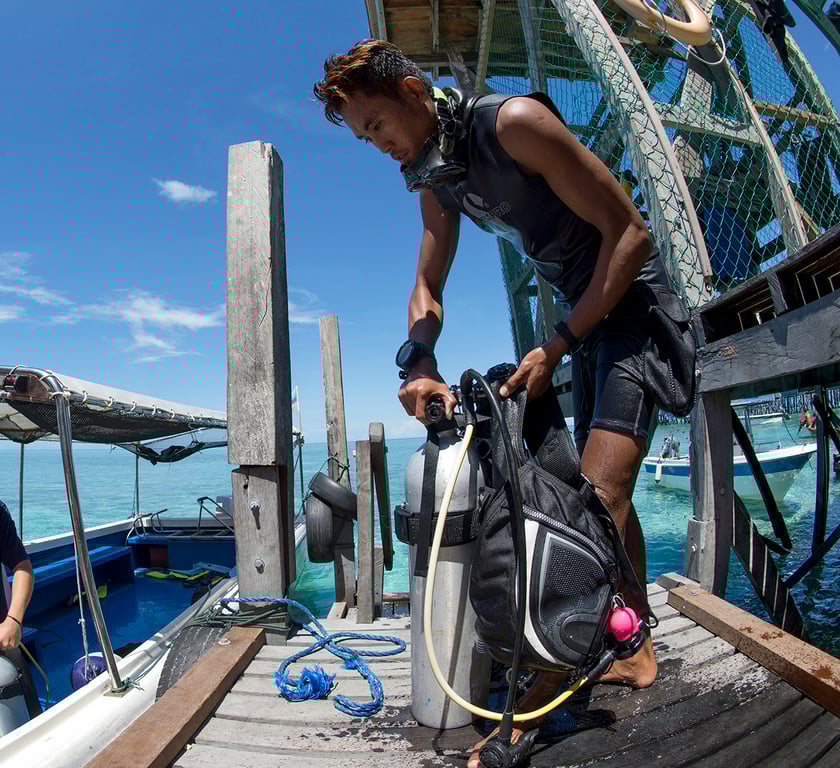

Every year, divers are lost in New Zealand waters in preventable circumstances. Diving can - and should - be a safe, enjoyable experience; a recent experience as told to DAN World gives good insight into how some basic pre-dive checks, and having a dive buddy with you, can keep you safe in the water.
"My daughter and I completed our first dive with no problems, but the weather and seas were very rough that day and during our surface interval the swells picked up to the point that my daughter felt unwell.
"When the time arrived for the second dive, we skipped most of the safety checks, only checking that our air was on, so she could get off the boat and into the water. During the dive briefing, the divemaster advised that the group would be entering the water negatively buoyant to quickly get below the swells and into calmer water.
"I descended slightly behind the divemaster and in front of my daughter. As we neared the top of the reef, I put a few bursts of air into my BCD, but my descent didn’t slow. Uh-oh, I thought. After two more unsuccessful tries, I realised that the worst that could happen would be to land on the bottom at 24 metres. I turned and got my daughter’s attention, signalled to her that I was having a problem, and then alerted the divemaster. My daughter swam up behind me, and I could feel her adjusting my gear. After about 30 seconds the divemaster signaled for me to try my inflator hose, and this time the air I put in my BCD stayed there. We continued the dive without further incident and enjoyed seeing the sharks, turtles, moray eels and reef fish.
"Back on the boat we critiqued the situation. When my daughter swam over to investigate, she saw bubbles coming from my regulator but went to double-check that my tank was fully open. Once she was behind me, she could see that the cover of the shoulder dump was off, so the BCD could not hold air. Luckily, the valve’s design kept all the parts together, so all was well after my daughter screwed the cover back on.
"When I got home, I called my dive instructor and shared my experience with him. We critiqued the event again, and I came away with the following lessons:
- Inspect your gear. Never skip your pre-dive safety checks. My daughter and I regularly dive together, so we were complacent about conducting thorough pre-dive safety checks, combined with wanting to get off the boat and into the water quickly. While I had neglected to check that dump valves work before every dive, I will do that now. My air check routine will always include testing the inflator hose and valve covers, not just the tank valve and regulators.
- Always dive with a buddy. While my rescue diver training prepared me to remove my BCD underwater to look at it if needed, it is much better to have someone examine my equipment while it’s still on me. Staying close is an important part of buddy diving. I have been in groups where dive buddies were at least 9 metres apart, but the further the distance, the harder it is to get your buddy’s attention and the easier it is to become separated.
- Don’t panic. Our training prevented us from panicking. I knew the worst thing that could happen was landing on the bottom and taking off the BCD to thoroughly check things if needed. My daughter realised I had air to breathe, so there was no immediate out-of-air situation, and she responded calmly.
- Listen to the dive briefing. The divemaster told us that the maximum depth was about 24 metres. Since it was dark due to the cloud cover, and depth is not easy for me to discern with my corrective lenses, I might have panicked had I not known that the bottom was close. Even as a master scuba diver, I still have things to learn and remember. As divers, we have basic safety principles for a reason. This incident could have been much worse if we were diving a wall and there was no bottom nearby; I am glad that my daughter and I had been thoroughly trained to address the situation.
Taking the extra time for both yourself, and your buddy before getting in the water is important for every diver on every dive."
Read more from
DAN World
Divers Alert Network (DAN) is the world’s most recognised and respected dive safety organisation, having remained committed to the health and well-being of divers for 40+ years.