
Avoiding the three Ds
Surviving in an underwater environment relies on avoiding deviations from safety
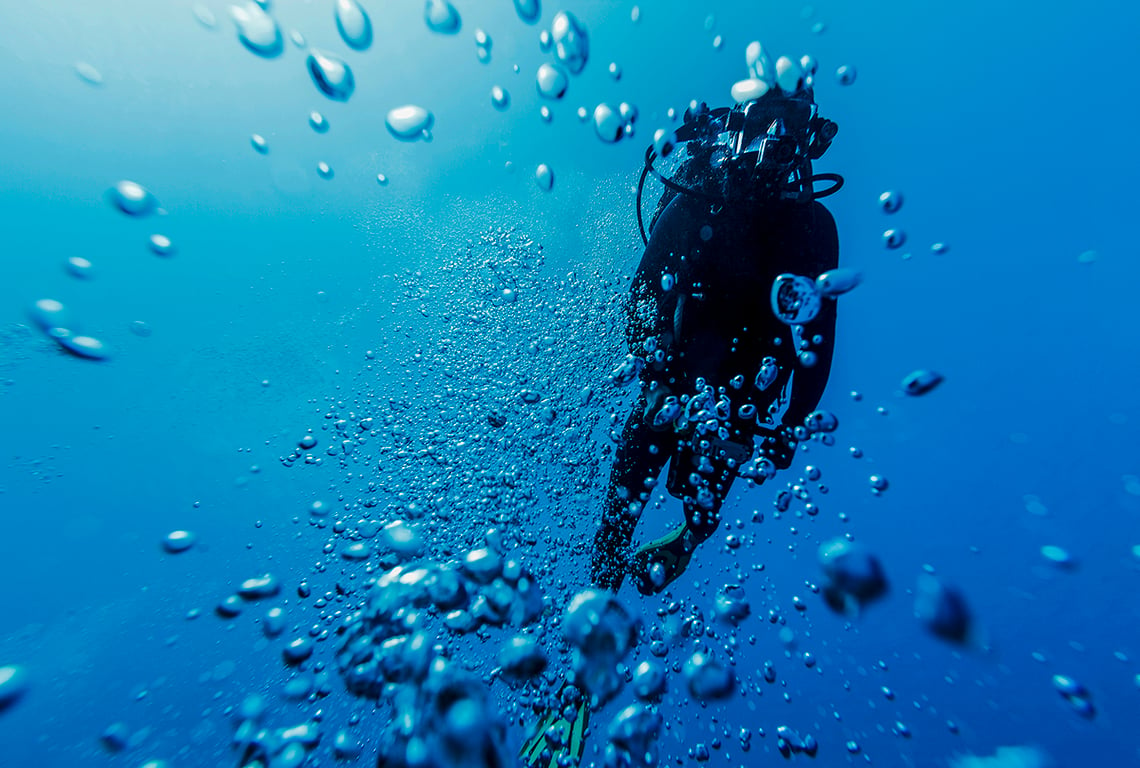

Avoiding the three Ds: Distraction, Discomfort and Disorientation
While diving is an enjoyable and relatively safe activity, divers should never forget that it involves using life-support equipment to venture into an environment that’s not conducive to human survival. Most dive accidents result from a series of small deviations from safe procedures, and in almost all cases, the accident could have been avoided at any point if a problem was noticed, its implications understood, and an appropriate response implemented.
Distraction
Task-loading (doing or managing too many things at once) is a common reason divers become distracted. An example is attempting to hold a light and camera while navigating an overhead environment.
Strong emotions can be significant enough to impact your ability to dive safely. If you’ve recently experienced grief or trauma, for example, take time to evaluate your well-being and emotional state as objectively as possible.
Anxiety can lead to uncertainty about the nature and reality of threats as well as self-doubt about one’s capacity to handle situations. As stress increases, a diver’s ability to recognise and respond properly diminishes. In a demanding situation, a diver must be able to recognise and break out of the escalating cycle of stress before it reaches the level of panic.
Discomfort
DAN medical staff typically advise against diving if experiencing any pain or discomfort. One reason for this is that pain could later be mistaken for a symptom of decompression sickness, complicating diagnosis after diving. But an even more important reason to avoid diving with pain or discomfort is that these symptoms can impair focus and awareness.
An upset stomach is not uncommon in diving settings. Seasickness affects many divers, and travel-associated disruptions to diet and schedule can also lead to queasiness. Divers should not descend unless their symptoms resolve. In fact, they should be supervised while on the surface.
Disorientation
It should go without saying that diving and intoxication do not mix. There’s too much information to keep track of, and too high a possibility of needing to make high-stakes judgement calls, to risk being impaired.
Remember, you’re responsible for you buddy’s safety as well as your own.
Poor sleep, jet lag, and hangovers can all affect mental acuity. These are not uncommon among travelling divers, so be sure to consider how they might affect you.
Some prescription (and even over-the-counter) medications have side effects that could make diving less safe. Warnings against using a drug while operating heavy machinery, for example, might also apply to diving. For this reason, doctors trained in dive medicine recommend against diving when taking a new medication for the first time. For a prescription medication taken daily, 30 days is recommended to ensure the dosage is correct and to reveal any side effects. At least one doctor should be aware of all medications an individual is taking to minimise the risk of drug interactions. A diver should not dive if experiencing any side effects that could cause distraction or decreased awareness if they occur underwater.
Keep in mind that any irritation, uncertainty, or trouble you’re experiencing on the surface is likely to become a bigger problem underwater, so stay out of the water until you’re confident your focus, awareness, judgement, and ability to manage additional stressors is back up to 100 percent.
Read more from
DAN World
Divers Alert Network (DAN) is the world’s most recognised and respected dive safety organisation, having remained committed to the health and well-being of divers for 40+ years.