
Ancient Egyptian 'floating palace' shipwreck discovered
Greek graffiti dates vessel to 1st Century AD
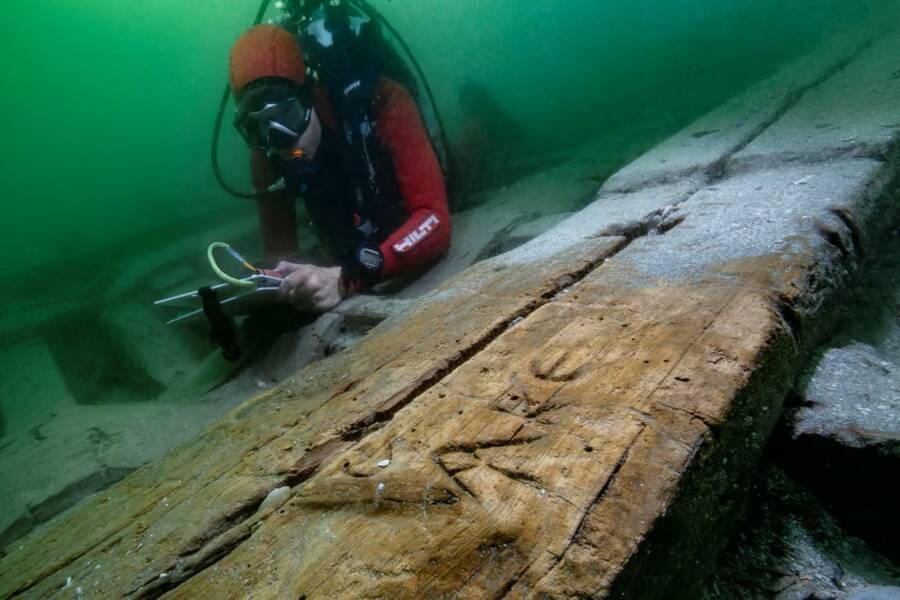

While diving off the coast of Egypt, underwater archaeologists have discovered a well-preserved, 2,000-year-old fully-submerged shipwreck off the coast of Alexandria that is believed to be an ancient Egyptian 'pleasure barge'.
Divers have long known that the city's royal harbour was once the glamorous centre of the ancient Greek world. However, this latest find, a luxury vessel, or 'thalamagos', that likely hosted prominent figures or took part in ceremonial processions in Roman Egypt, is the first ancient Egyptian pleasure barge ever to be uncovered, despite scholars knowing of their existence for centuries. No remains of such a vessel have ever been found, although they have been described by ancient writers and portrayed in Egyptian art.
The shipwreck was discovered in October 2025 in the submerged island of Antirhodos, once part of Alexandra's ancient port, less than 50 metres from Alexandria's Temple of Isis, which is currently undergoing excavation. The port still contains unrevealed secrets from the days of Julius Caesar, Cleopatra and Marc Antony.
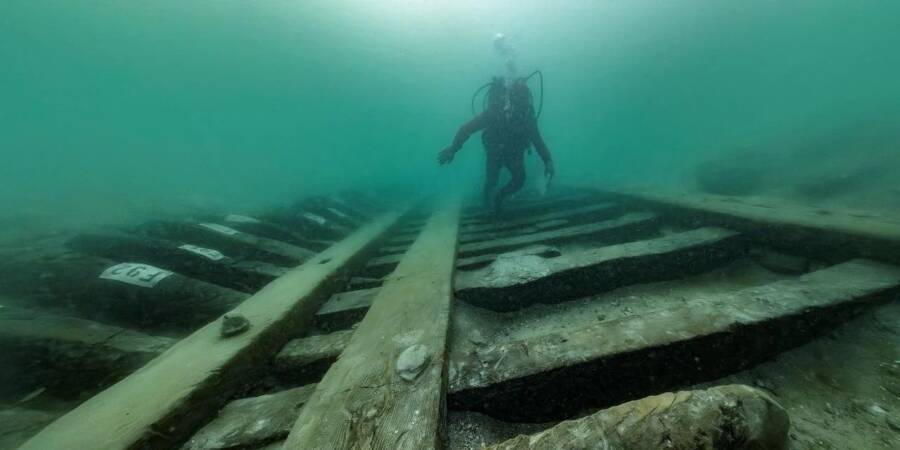
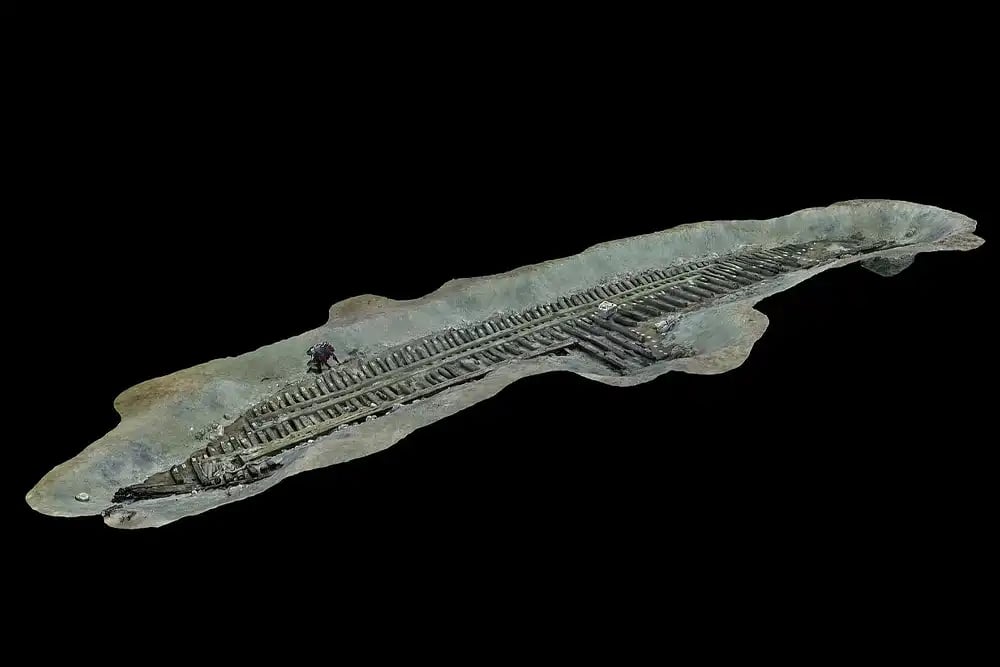
According to a release from the Institut Européen d’Archéologie Sous-Marine (IEASM), the preserved timbers measure around 28 metres, which corresponds to an original vessel that would have been around 35 metres long and seven metres wide - designed to be wide so as to accommodate a centre pavilion and an elaborate cabin. Here - in the words of first-century B.C. Greek historian Strabo - the wealthy and powerful "could dance without restraint and with extreme licentiousness".
The vessel's hull design is flat, suggesting the boat was likely used to traverse shallow, calm waters, rather than open sea, and the huge vessel likely required at least 20 rowers to move the boat using oars. On the boat's central timber carling, Greek graffiti - which has yet to be deciphered - dates the vessel to the first half of the first century. The graffiti also helped archaeologists deduce the ship was likely made locally in Alexandria.
Although there are several theories as to these barges' actual purpose, researchers have suggested it may have been used for ritual purposes. One possibility is was that it was part of the 'navigatio iside', a naval ceremony in which a decorated vessel would sail the goddess Isis, mistress of the sea, from Alexandria's harbour to Osiris at Canopus, another ancient Egyptian port.
Another theory comes from Strabo, who wrote that the barges, popular in the Ptolemaic dynasty in Egypt, were used to ferry the wealthy between choice spots: "...they hold feasts in cabin-boats in which they enter the thick of the cyami [freshwater Egyptian lotuses] and the shade of the leaves".
IEASM director Franck Goddio, who is leading the expedition, suggests the ship may have been tied to a nearby temple of Isis, and could have sunk during a series of earthquakes and tidal waves around 50A.D.
Research into the shipwreck is still at a very early stage, but Goddio says it "promises to be a fascinating journey into life, religion, luxury and pleasures on the waterways of early Roman Egypt".
Read more from
Dive Pacific
Dive Pacific is the media arm of the New Zealand Underwater Association